
The Kalki Movie

Making Sense with the Bhagavad-gita
While such movies may become highly successful, it will be good if the moviemakers can abide by certain principles in order to make the best out of such production By Chaitanya Charana Dasa
The Kalki movie has had an overwhelming response at the box office. How can we make sense of this movie with the lens of the Bhagavad-gita? I’ll talk about three things: connection, concoction, and conception.
Connection: It is good that a connection with the tradition is being made in popular culture today, which is what reaches the masses. Through such depictions in popular culture, the themes and characters from the tradition are introduced to the general public. And even for those who are introduced to these characters in their childhood, these characters come back again within the horizon of their consciousness. So, any kind of connection that is established is, at a basic level, positive. The scriptures explain that somehow or the other, if the divine, if Krishna, enters into consciousness, even if it be through depictions in popular culture of themes associated with the Lord, that is a good thing.
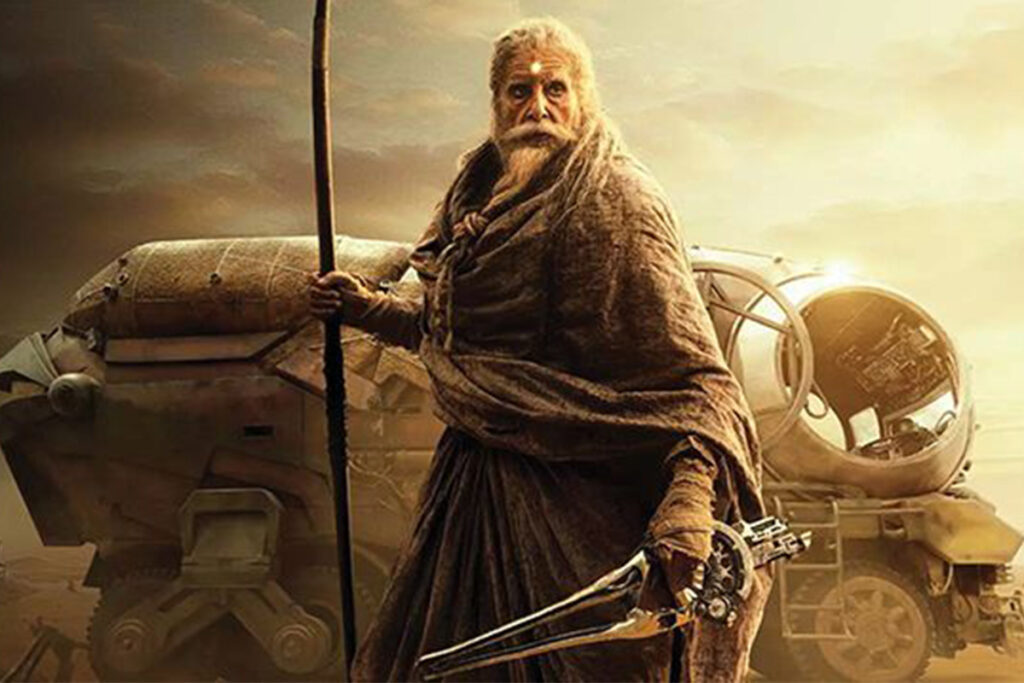
The story of Ashvatthama being relieved of the curse is questionable.
Here, the story of Ashvatthama and how he was cursed by Krishna for his heinous act of attempting to kill Uttara’s son, later named Parikshit — that is depicted. The idea of Kalki coming in the future as the tenth avatar of Vishnu, is, of course, the core theme of the movie — although Kalki doesn’t appear in this movie at all, and there’s going to be a sequel where that may happen. But this connection is good. The Bhagavad-gita (3:26) states that the ways of the attached are different from the ways of those who are detached; similarly, the ways of the ignorant are different from the ways of those who are wise. Those who are detached and wise will be ready to understand the wisdom of the tradition as it is given, to dive deep into the sacred texts like the Mahabharata and the Bhagavatam, and to embrace and be enriched with that wisdom. But many people who are not ready for that will need depictions through popular culture of the kind that are being done over here.
While the fact that the connection is established is good, a matter of natural concern would be that there are concoctions, which is the second point.
Concoction: And these concoctions do come up in Kalki. For example, the future depicted over there involves a mishmash of characters taken from the epics and blended with characters and imagery and ideas from Western popular franchises like Mad Max or The Matrix. When such concoctions are done — and there are many others — the question comes up: is it a net good or bad? Broadly speaking, within the tradition itself, there is room for artistic license. We all have been given imagination as a gift by God, and some people have this gift of imagination far more than others. The Gita 7.8 states that all abilities come from God, and ultimately all abilities are meant to be used to serve God. Sva-karmana tam abhyarcya: worship the Lord through your work, as Krishna explains in 18.46-48. Those who have the power of imagination can and should use that power to depict themes from the sacred tradition in a way that will be relatable and appealing to the masses. To give those with imagination some leeway, there is the provision of artistic license.
For example, in the past when dramas would be written, the drama scenes and the various dialogues need not be an exact replica of what is told in the original scriptures. But as long as the essential mood is retained and the essential message is conveyed, then the artistic license is acceptable. So when does the concoction go too off, and when does it stay acceptable? That depends on the last part: conception.
Conception: When the conception that the makers of the movie and the conceptions that the audience gets about the sacred themes and the sacred characters therein are broadly in alignment with the conceptions that are taught in the tradition and the scriptures, then that is the best result. Of course, popular culture cannot be expected to have conceptions exactly aligned with philosophically precise reasonings in the scriptures and their commentaries. That is not the function of popular culture. Krishna describes there is intelligence in goodness, passion, and ignorance, and these three intelligences will actually see things differently as explained in 18.30, 31, and 32. So the intelligence in goodness, which is where traditional teachings are largely situated, will see things differently from intelligence in passion or in ignorance, which is where popular culture is generally going to be. Drama, action, romance, conspiracy — these will be prioritized much more than the conveying of philosophically precise notions or devotionally precise emotions. However, if the overall conception is not in violent disagreement with what is given in the tradition, then such popular depictions can open the minds of people to read more about the tradition. In the Gita 7.16, Krishna says that one of the four kinds of people who approach him are those who are curious. How do people become curious? One of the ways could be that they see something depicted in popular culture. When such popular culture depictions occur, at that time, it is the opportunity and the responsibility of the tradition and its teachers to tap the curiosity that arises and to provide more holistic conceptions of what has been depicted in such movies.
If we look at the history of movies in the West, there were movies about Jesus like The Passion of the Christ, which became quite popular. Although the depictions of Jesus in those movies were not necessarily very accurate as per the Bible and many traditional scholars of Christianity panned such movies, many mainstream movie producers saw that such movies were economically viable and thus they started making movies more and more intended for a Christian audience. Now there is the TV series The Chosen, which has been hugely popular among the masses and hugely commercially successful, while at the same time, it is presenting a picture of Jesus which is humanly appealing and scripturally faithful.
With the Indian tradition on the ascent in its assertiveness and its influence after the inauguration of the Ram temple, we can also hope that the popular culture in India starts depicting more and more of these traditional themes. If the producers of popular culture and the teachers of tradition can come together, then India can experience an unprecedented cultural and spiritual elevation through the medium of traditional spiritual themes being taught through popular culture. That is what we can hope for through the success of movies like Kalki.
Three Things Wrong With The Movie
The first wrong thing is the issue of Ashvatthama. Here, it is depicted that Ashvatthama was cursed by Krishna to wander alone until he would save a future avatar of Vishnu, and then he would be relieved from the curse. Now, the cursing of Ashvatthama is an incident mentioned in multiple places in the Mahabharata and the Bhagavatam, and this is definitely not mentioned that way in these books. In the Bhavishya Purana, in some versions, something like this is mentioned. The Bhavishya Purana is often a much-touted book, but our tradition’s acaryas have been quite sparing in quoting it, and it’s widely understood that there are interpolations in that book. So, that central prophecy of Ashvatthama’s curse being relieved by being able to save a child may seem poetically attractive, but its scriptural basis is questionable. This does not make it a terrible thing; as I had mentioned, in artistic license, some things can be done. Overall, Ashvatthama was a noble person, and although he was attached to trying to prove himself to be the greatest archer and better than Arjuna, apart from that, he respected Arjuna as a rival and had no animosity against the Pandavas.
However, it was after Drona was killed and after Duryodhana told Ashvatthama that the Pandavas had killed Drona in a cold-blooded conspiracy—which was a complete distortion. Why? Because it was actually an individual act of cold-blooded cruelty by Dhrishtadyumna that led him to lopping off the head of Drona when he was meditating, and Arjuna chastised him for it, causing a civil war among the Pandavas—that Ashvatthama turned bitter and became vengeful. He eventually killed the Pandavas’ sons, committed a nighttime massacre, and tried to kill the child in the womb of Uttara. The point here is that Ashvatthama did get misled and did do horrendous things. Why am I talking about all this? This is because Ashvatthama’s character has been depicted in a particular way in the movie that doesn’t harmonize with the epic.
One of the major erroneous things depicted here is that Ashvatthama and Karna had a great friendship, but that is not true at all. It came from both ways: Karna felt resentful that Drona had not accepted him in his gurukula and felt that Drona was partial to the Pandavas. Therefore, there was no affection in Karna’s heart for Drona, and when Karna would try to boast about his powers, both Bhishma and Drona would try to bring him down to earth. Karna felt minimized, and there were times when Karna would minimize Drona. Especially at one time during the war, when Karna tried to minimize Drona, it was unbearable for Ashvatthama. Ashvatthama lashed out at Karna, and there was almost a fight between them.
This especially happened when Jayadratha was killed on the fourteenth day by Arjuna. That was a devastating loss—not just a loss of military forces, but a morale-shattering and shameful debacle for the Kauravas that their entire army, including all their maharathas, couldn’t stop one Arjuna. At that time, Karna lashed out at Drona’s incompetence, and Ashvatthama came to the defence of his father.
There were other instances as well with the key point that there was no love lost between them. The depiction that Karna and Ashvatthama were both great friends is definitely a concoction that is at significant variance with what the Mahabharata storyline and overall relational dynamics would indicate.
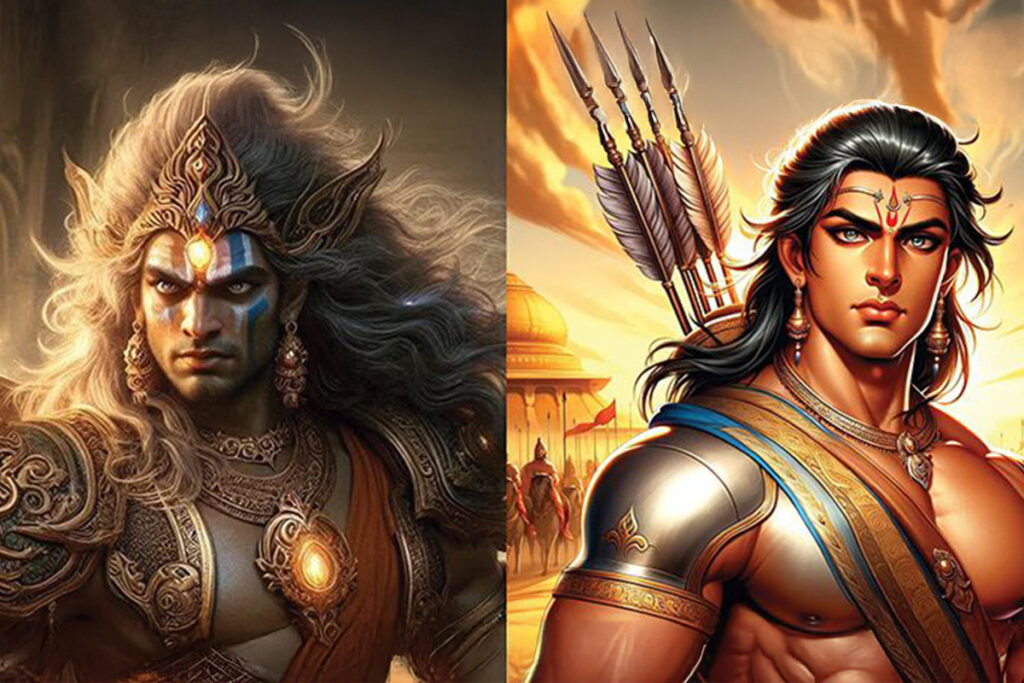
Ashvatthama and Karna: Were they really great friends as depicted in the movie?
Now, both of them did fight on the side of Duryodhana, but it was completely for different reasons. Drona felt obligated to the Kuru kingdom, which had provided him the place and the facility for establishing his gurukula, and that’s why he fought on their side. Because his father fought on that side, and father and son had a strong bond— although sometimes with a bit of unhealthy attachment, Ashvatthama also fought on the side of the Kauravas. Drona had affection for his son, naturally, and had affection for Arjuna because he was such a great student. Ashvatthama felt challenged and even threatened and usurped in his position of affection from his father because of Arjuna’s expertise. So, there was some rivalry among them, but the rivalry was not enmity. Ashvatthama wanted to be the better archer, but it was not enmity that he wanted to destroy Arjuna. The relationship between Karna and Arjuna was not rivalry; it was enmity. In contrast, Karna wanted to prove his greatness by destroying Arjuna. The reason I’m saying this is that, although they were both on the same side, they were not great friends, and there were times when their differences of opinion were quite severe.
Lastly, the depiction of Arjuna is often done wrongly in popular culture, especially to glorify or empathize with Karna. If we look at the overall character, there is not one incident when Arjuna has ever minimized women. He has always been a protector of women, whereas Karna very heinously minimizes women. First of all, in the gambling match, when he suggests that Draupadi be disrobed, he justified that by saying a woman who has five husbands is already like a prostitute, and the more men she has, the more she will enjoy having even more men. Therefore, there is nothing wrong with disrobing her. This was a heinous accusation against Draupadi because Draupadi had not sought out five husbands; it was a higher arrangement by which this had happened.
Also, towards the end of the Mahabharata war, when he had a difference of opinion with Salya, he criticized Salya, his province, and even the women of his province. Karna had his virtues, but if a warrior kshatriya is defined by their capacity to protect the innocent, then protecting women is important. Arjuna was a far better protector of women than Karna, who repeatedly spoke negatively about women.
To summarize, in the “Kalki” movie, there is positivity in that the characters and the storyline from the Vedic tradition and the Mahabharata are brought into mainstream consciousness. However, the specifics are problematic. What I outlined is not an exhaustive list of the specifics, and I don’t want to sound totally critical. It is good that such depictions are happening, but the more aligned they are with the original topics, the better it is.
Chaitanya Carana Dasa is the associate-editor of Back to Godhead (US and Indian editions). To read his daily Bhagavad-gita reflections, please subscribe to Gitadaily on his website, thespiritualscientist.com.
बीटीजी डिजिटल पत्रिका की सदस्यता लें
BTG डिजिटल मैगज़ीन के साथ कृष्ण भावनामृत के अपने पथ पर आगे बढ़ें! अभी सदस्यता लें और हमारे समुदाय द्वारा साझा की गई विकास, आत्मज्ञान और जुड़ाव की प्रेरणादायक कहानियों को जानें।
सदस्यता लें