A Grand Orchestra of Faith and Devotion

Free to Read
5 mins September, 2026
00:00
00:00

Some salient features of the recently-concluded Maha-kumbha Mela


By Dinabandhu Caitanya Das


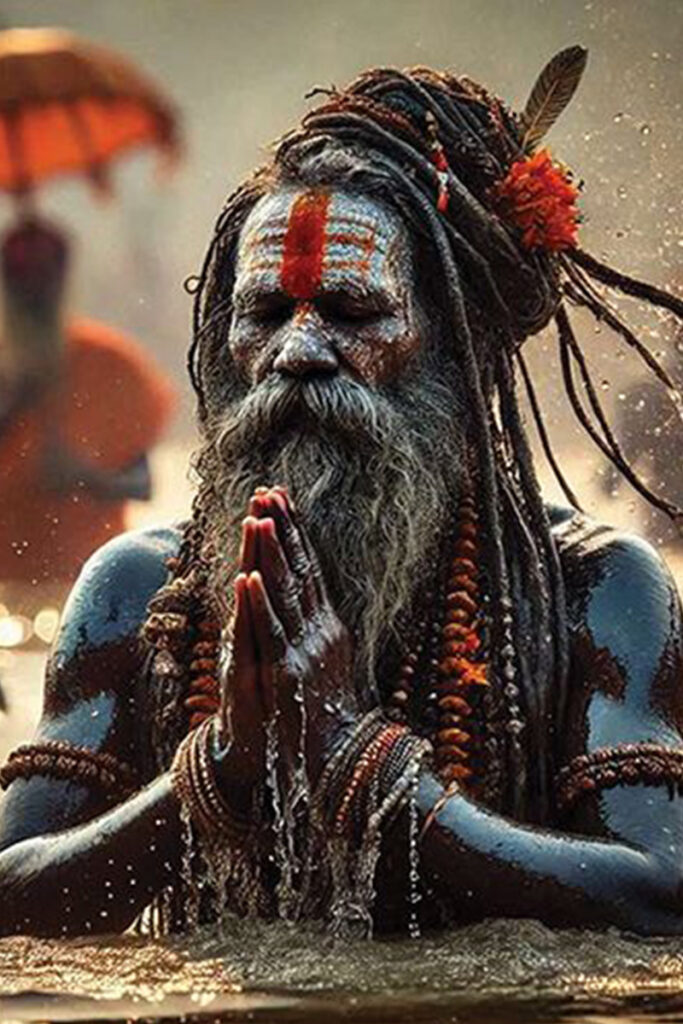
Every twelve years, a  profound spiritual event  unfolds at the confluence of India’s holiest rivers, the Ganges, Yamuna, and the unmanifested Sarasvati, in the town of Prayagraj in western Uttar Pradesh state. This event is none other than the Kumbha-mela —drawing people from all corners of the world to partake in the largest peaceful gathering on Earth. Mother Ganges who is the center of attraction and devotion at the Kumbha readily welcomes all her children affectionately into her arms, if only they are willing. It is more than just a religious festival; it is a transformative experience that weaves together faith, history, culture, human relationships and divinity in a truly extraordinary way. The Kumbha is an extravaganza beyond human imagination and capacity: it almost appears like a celestial event that humans are assisting to unfold. This year’s spectacle known as the Maha-kumbha is even more special, happening once in 144 years after completing twelve cycles of twelve years each, a once-in-a-lifetime pilgrimage for millions of enthusiastic devotees. We reflect on some of the foundational factors that are the hallmark traits of the Kumbh, as we experienced it first-hand at the Kumbh.


  1. 1) The world as one family: Vasudhaiva kutumbakam is the central tenet and guiding mantra of Sanatana-dharma. It means that the whole world is united as one family centered around our supreme well-wisher and father, Lord Krishna. Nowhere is the all-embracing nature of Sanatana-dharma as evident as in the Kumbha. Unknown people emerge out of nowhere into our lives like long-lost friends, strangers become kinsmen, the common man replaces google maps for directions, the sky wraps around us as a blanket, and the earth cradles us in its embrace. On multiple occasions totally unknown people went the extra mile and personally escorted us to our destination at the Kumbha when we were directionless and lost. People were sharing food, blankets, medicines, practical advice and most importantly, concern with each other.

  2. 2) Unity in diversity: Unity (ekata) in diversity (vividhata) is a cornerstone quality of Sanatana-dharma. Diverse schools of philosophy such as Saivism, Vaisnavism and Sikhism with followers from all nationalities, occupations, caste, creed and genders are united in their faith under one banner at the Kumbha — faith that dharma will protect those who protect it. Petty differences are relegated to the backseat recognizing the larger and broader principles of dharma and the supreme truth that binds us humans together. The message is strong and clear: diversity is at the core of God’s creation. There cannot be a world that thinks alike, so we must aspire for and achieve unity amidst diversity, for that is a fundamental truth of life.

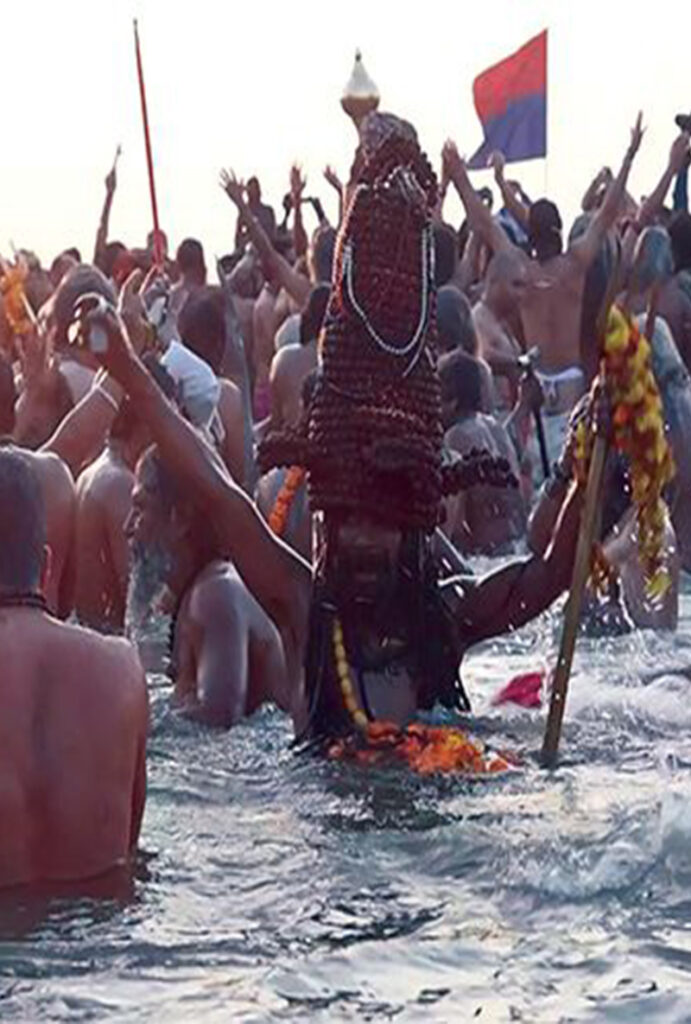
  3. 3) Immensity of the Kumbha: The scale of the Kumbha must be seen to be understood, the numbers are probably best interpreted by computers, considering the number of trailing zeros in the statistics. Consider this: a total of 450 million people have been estimated to have taken a holy bath in this year’s Mahakumbha, including 100 million people simply on Amrita-snan days (special auspicious dates for bathing) such as Mauni Amavasya2. This scale is unprecedented and unparalleled by any popular sporting, musical or political extravaganza on this planet. Even the biggest of rock concerts and popular musical bands may attract a million people at best for a single event, with a lot of advertising and ticketing. That the Kumbha attracts millions of faithful with a tiny fraction of such advertising and promotions is a testimony to its uniqueness and divinity.


4) The Kumbha economy: The sheer scale of transactions that define the Kumbha is mind boggling. It is estimated that revenues from the MahaKumbha could soar to 2 lakh crore (26.67 billion USD1) providing much needed short-term employment in the unorganized sector of India’s workforce. Thousands of locals from small to large business owners including transport providers (such as taxi, boat, bus owners), hoteliers, pandits and those part of the temple-based dharmic economy have been immensely benefited. The international economy also benefited with thousands of international visitors arriving to witness the grandeur of the Maha-kumbha.

5) The Kumbha vibes: Saintly vibes reinforce virtues. Just like association of the worldly-minded reinforces the selfishness within us, the association of saints and sincere devotees acts as a powerful catalyst to reinforce the selflessness and awaken the dormant service attitude within us. We saw hundreds of prasadam distribution counters spread across the Kumbha, ensuring no one went hungry. Rich industrialists had tied up with spiritual organizations to serve the mass of humanity that had descended at the Kumbha. Even animals appeared to be well nourished, rejoicing and basking in the sudden attention and kindness showered on them by the passing pilgrims unhesitatingly sharing their food with them.

6) Beyond the comfort zone: One of the defining characteristics of the Kumbha is that the faithful willingly come prepared for austerity. This helps one break free of the comforts and indulgences that are typical of householder life. Even sadhus and monks leading frugal lives come here seeking rejuvenation in the company of fellow seekers. Young and old, rich and poor, educated and illiterate, everyone comes prepared to walk many miles, dip their bodies in freezing cold water, tolerate hunger and thirst and constant pushing and shoving among huge crowds, all to access the abundance of mercy that is available here, if only one desires it.


7) Living beyond designations: The Kumbha attracts millions of faithful, many of whom are well educated and qualified in the professional world. We met scientists, CEOs, architects, consultants, doctors and many other accomplished people who were humbly serving the pilgrims in their own little (or big) ways. They come here to forget their material designations, not flaunt them. They were all doing their part to protect and reinforce Sanatana-dharma, by their example, not simply words.

8) Administrative wonder: It is hard to imagine how a government could handle the influx as huge as that of the Kumbha effectively. Any amount of managerial and administrative skills would fall short in managing such a huge event, but nevertheless, it appears that a combination of human effort and divine intervention ensures that the event is conducted as smoothly as possible. The logistical complexities are immense, but somehow, the event unfolds with a graceful sense of order and harmony, almost as if the very spirit of the gathering orchestrates its smooth flow.
The MahaKumbha stands as a testament to the immense grandeur, scale, and unwavering faith of millions of devotees. The bathing, rituals, devotion, and unity witnessed here reflect an extraordinary timelessness rarely witnessed in today’s human society. In this grand gathering, diverse individuals set aside differences, coming together in a shared pursuit of spiritual awakening. The sheer scale of the event demonstrates how unity in purpose can transcend barriers and create an atmosphere of collective transformation. It is a powerful reminder of how human society, when united in devotion and faith centered on our common source, Lord Krishna, can experience profound change, fostering harmony and spiritual awakening on a global scale.


Dinabandhu Caitanya Dasa, a disciple of His Holiness Radhanath Swami graduated with a PhD from the National University of Singapore and currently holds a faculty appointment at the Indian Institute

Subscribe to BTG Digital Magazine

Embark on your path to Krishna consciousness with BTG Digital Magazine! Subscribe now and discover inspiring stories of growth, enlightenment, and connection shared by our community.

Subscribe

A Grand Orchestra of Faith and Devotion

A Grand Orchestra of Faith and Devotion
Listen to Article
Press Play to listen

Some salient features of the recently-concluded Maha-kumbha Mela


By Dinabandhu Caitanya Das


Every twelve years, a  profound spiritual event  unfolds at the confluence of India’s holiest rivers, the Ganges, Yamuna, and the unmanifested Sarasvati, in the town of Prayagraj in western Uttar Pradesh state. This event is none other than the Kumbha-mela —drawing people from all corners of the world to partake in the largest peaceful gathering on Earth. Mother Ganges who is the center of attraction and devotion at the Kumbha readily welcomes all her children affectionately into her arms, if only they are willing. It is more than just a religious festival; it is a transformative experience that weaves together faith, history, culture, human relationships and divinity in a truly extraordinary way. The Kumbha is an extravaganza beyond human imagination and capacity: it almost appears like a celestial event that humans are assisting to unfold. This year’s spectacle known as the Maha-kumbha is even more special, happening once in 144 years after completing twelve cycles of twelve years each, a once-in-a-lifetime pilgrimage for millions of enthusiastic devotees. We reflect on some of the foundational factors that are the hallmark traits of the Kumbh, as we experienced it first-hand at the Kumbh.


  1. 1) The world as one family: Vasudhaiva kutumbakam is the central tenet and guiding mantra of Sanatana-dharma. It means that the whole world is united as one family centered around our supreme well-wisher and father, Lord Krishna. Nowhere is the all-embracing nature of Sanatana-dharma as evident as in the Kumbha. Unknown people emerge out of nowhere into our lives like long-lost friends, strangers become kinsmen, the common man replaces google maps for directions, the sky wraps around us as a blanket, and the earth cradles us in its embrace. On multiple occasions totally unknown people went the extra mile and personally escorted us to our destination at the Kumbha when we were directionless and lost. People were sharing food, blankets, medicines, practical advice and most importantly, concern with each other.

  2. 2) Unity in diversity: Unity (ekata) in diversity (vividhata) is a cornerstone quality of Sanatana-dharma. Diverse schools of philosophy such as Saivism, Vaisnavism and Sikhism with followers from all nationalities, occupations, caste, creed and genders are united in their faith under one banner at the Kumbha — faith that dharma will protect those who protect it. Petty differences are relegated to the backseat recognizing the larger and broader principles of dharma and the supreme truth that binds us humans together. The message is strong and clear: diversity is at the core of God’s creation. There cannot be a world that thinks alike, so we must aspire for and achieve unity amidst diversity, for that is a fundamental truth of life.

  3. 3) Immensity of the Kumbha: The scale of the Kumbha must be seen to be understood, the numbers are probably best interpreted by computers, considering the number of trailing zeros in the statistics. Consider this: a total of 450 million people have been estimated to have taken a holy bath in this year’s Mahakumbha, including 100 million people simply on Amrita-snan days (special auspicious dates for bathing) such as Mauni Amavasya2. This scale is unprecedented and unparalleled by any popular sporting, musical or political extravaganza on this planet. Even the biggest of rock concerts and popular musical bands may attract a million people at best for a single event, with a lot of advertising and ticketing. That the Kumbha attracts millions of faithful with a tiny fraction of such advertising and promotions is a testimony to its uniqueness and divinity.


4) The Kumbha economy: The sheer scale of transactions that define the Kumbha is mind boggling. It is estimated that revenues from the MahaKumbha could soar to 2 lakh crore (26.67 billion USD1) providing much needed short-term employment in the unorganized sector of India’s workforce. Thousands of locals from small to large business owners including transport providers (such as taxi, boat, bus owners), hoteliers, pandits and those part of the temple-based dharmic economy have been immensely benefited. The international economy also benefited with thousands of international visitors arriving to witness the grandeur of the Maha-kumbha.

5) The Kumbha vibes: Saintly vibes reinforce virtues. Just like association of the worldly-minded reinforces the selfishness within us, the association of saints and sincere devotees acts as a powerful catalyst to reinforce the selflessness and awaken the dormant service attitude within us. We saw hundreds of prasadam distribution counters spread across the Kumbha, ensuring no one went hungry. Rich industrialists had tied up with spiritual organizations to serve the mass of humanity that had descended at the Kumbha. Even animals appeared to be well nourished, rejoicing and basking in the sudden attention and kindness showered on them by the passing pilgrims unhesitatingly sharing their food with them.

6) Beyond the comfort zone: One of the defining characteristics of the Kumbha is that the faithful willingly come prepared for austerity. This helps one break free of the comforts and indulgences that are typical of householder life. Even sadhus and monks leading frugal lives come here seeking rejuvenation in the company of fellow seekers. Young and old, rich and poor, educated and illiterate, everyone comes prepared to walk many miles, dip their bodies in freezing cold water, tolerate hunger and thirst and constant pushing and shoving among huge crowds, all to access the abundance of mercy that is available here, if only one desires it.


7) Living beyond designations: The Kumbha attracts millions of faithful, many of whom are well educated and qualified in the professional world. We met scientists, CEOs, architects, consultants, doctors and many other accomplished people who were humbly serving the pilgrims in their own little (or big) ways. They come here to forget their material designations, not flaunt them. They were all doing their part to protect and reinforce Sanatana-dharma, by their example, not simply words.

8) Administrative wonder: It is hard to imagine how a government could handle the influx as huge as that of the Kumbha effectively. Any amount of managerial and administrative skills would fall short in managing such a huge event, but nevertheless, it appears that a combination of human effort and divine intervention ensures that the event is conducted as smoothly as possible. The logistical complexities are immense, but somehow, the event unfolds with a graceful sense of order and harmony, almost as if the very spirit of the gathering orchestrates its smooth flow.
The MahaKumbha stands as a testament to the immense grandeur, scale, and unwavering faith of millions of devotees. The bathing, rituals, devotion, and unity witnessed here reflect an extraordinary timelessness rarely witnessed in today’s human society. In this grand gathering, diverse individuals set aside differences, coming together in a shared pursuit of spiritual awakening. The sheer scale of the event demonstrates how unity in purpose can transcend barriers and create an atmosphere of collective transformation. It is a powerful reminder of how human society, when united in devotion and faith centered on our common source, Lord Krishna, can experience profound change, fostering harmony and spiritual awakening on a global scale.


Dinabandhu Caitanya Dasa, a disciple of His Holiness Radhanath Swami graduated with a PhD from the National University of Singapore and currently holds a faculty appointment at the Indian Institute