Getting Out of the Darkness of Ignorance

Free to Read
10 mins September, 2026
00:00
00:00

Living without understanding the basic facts of reality is sure to lead to suffering.


by His Divine Grace
A. C. Bhaktivedanta Swami Prabhupada


Founder-Acarya of the International Society for Krishna Consciousness


narayana namaskritya
narascaiva narottamam

devim sarasvatim vyasam
tato jayam udirayet

“Before reciting this Srimad-Bhagavatam, which is our very means of conquest, I offer my respectful obeisances unto the Personality of Godhead Narayana, unto NaraNarayana Rishi, the supermost human being, unto mother Sarasvati, the goddess of learning, and unto Srila Vyasadeva, the author.”


– Srimad-Bhagavatam 1.2.4


THIS IS THE parampara system. Krishna is the original spiritual master, and then from Krishna, Lord Brahma, the first creating being in the universe, learned the Vedic knowledge. Tene brahma hridaya adi-kavaye (Srimad-Bhagavatam 1.1.1). One may naturally ask, “From where did Brahma get his knowledge?” because whenever we want to get knowledge we must approach a superior person to get it. The Mundaka Upanisad(1.2.12) says, tad-vijsanartham sa gurum eva abhigacchet: “To understand these things properly one must humbly approach a spiritual master.”


The guru, or spiritual master, must be a superior person. So who was the superior person when Brahma got knowledge? There was no other creature; he is the first creature. Therefore the first verse of Srimad-Bhagavatam indicates that the superior person was Krishna even though He was not present there with Brahma. We see that Krishna was present before Arjuna, but nobody was present before Brahma. Therefore it is said, tene brahma hridayaadi-kavaye. Hrida: “through the heart.”


Brahma received knowledge from Krishna from within the heart because Krishna is situated in everyone’s heart. Actually, He is the spiritual master in everyone’s heart, known as caitya-guru. So in order to help us, He comes out as the physical spiritual master. And therefore the spiritual

master is the representative of Krishna. Krishna sends some sincere devotee to act on His behalf, and therefore Krishna is the spiritual master.


This is the parampara system. Krishna instructed Brahma, Brahma instructed Narada, Narada instructed Vyasadeva, and Vyasadeva instructed his disciple Madhvacarya. In this way we have to go through also, in the same way. First of all one offers respect to one’s own spiritual master, as Suta has done to Sukadeva Goswami in the previous verse. Tam vyasasunum upayami gurum muninam (Bhagavatam 1.2.3). Then one offers respect to one’s guru’s spiritual master, then his spiritual master, then his spiritual master. Just like you have got the pictures: first of all your spiritual master, then his spiritual master, then his spiritual master, then his spiritual master – ultimately Krishna. This is the process. Don’t try to approach Krishna directly. Don’t jump over. That is useless. As we receive knowledge through the steps – the parampara system – similarly we should approach Krishna through these steps.

narayanam namaskritya
naram caiva narottamam
devim sarasvatim vyasam
tato jayam udirayet


In this way you become glorified. [Reading from the purport:] “All the Vedic literatures and the are meant for conquering the darkest region.” Human civilization means how to get out of this darkness of ignorance. It is not for jubilantly jumping like dogs and cats. “I am a big dog. Let me jump over.” That is not civilization. That is animal civilization. The animals are jumping naked, and so many so-called humans are jumping dressed, that’s all. That is the difference. Otherwise, where is the difference? There is no difference as long as we have this bodily concept of life. “Let me enjoy this body, these senses.”
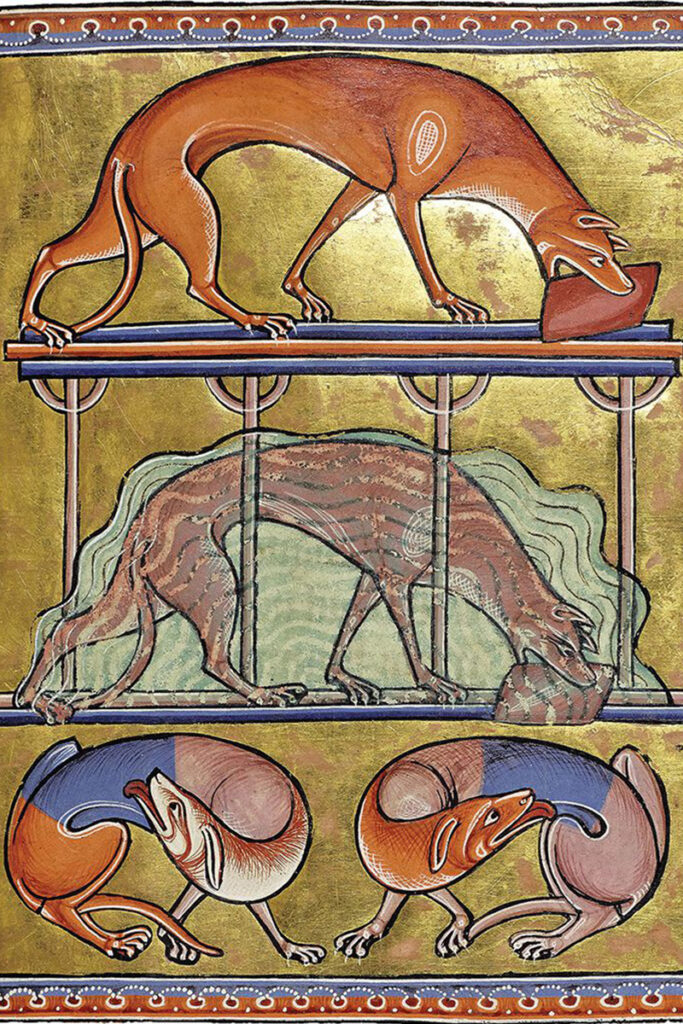


The Greed of the Tongue


“Body” means the senses. As long as one is in the darkness of ignorance, his predominant feature of enjoyment is the senses, that’s all. “Let me enjoy. I have got this tongue. Let me go to the restaurant the whole day. Cut the throat of this animal, that animal, and enjoy, and let the animal go to hell. Let me enjoy.” This is jihva-lobha, the greed of the tongue.

Ta’ra madhye jihva ati lobhamoy sudurmati ta’ke jeta kathina samsare. Bhaktivinoda Thakura says,


“Amongst the senses, the most powerful sense is the tongue.” You see? They are smoking – chain smoker, going on, going on. What is this? There is some sensation. And if we smoke a cigarette or drink, it is simply because of the tongue.

The tongue is dictating, “Do this, do that. Take this, take coffee, take tea, smoke, take flesh, take chicken, take this, take this, take . . .” That means that out of the all the senses, the tongue is the most formidable. Therefore Bhaktivinoda Thakura says, ta’ra madhye jihva ati lobhamoy sudurmati ta’ke jeta kathina samsare. It is very difficult to conquer the tongue. And if you can conquer the tongue, then you can conquer the belly, and then you can conquer the genitals. It is a straight line, one after another.


You know the story: A dog was crossing a small rivulet, and he saw his own reflection and thought it was another dog in the water. Actually, there was no dog. He was carrying some food in his mouth, and he saw another dog within the water. So he thought,


“Let me take his foodstuff from his mouth,” and as he opened his own mouth – he wanted to take the other dog’s foodstuff – whatever he had was gone. You see? This is dog philosophy.

“Take away.” Take another’s meal; he loses his own. This is called illusion, maya. This Aesop’s fable story is very instructive. This is dogs’ philosophy.


All these so-called empires … The Roman Empire was expanded. The British Empire was expanded. Now they have lost everything. Finished. The dogs’ business was finished.


Therefore our philosophy is “Be satisfied with whatever God has given you.” Tena tyaktena bhunjitha ma gridhah kasya svid dhanam (Isopanisad, Mantra 1). Be satisfied with whatever is given to you by God, whatever is allotted to you. Don’t try to encroach upon others’ property. This is civilization. But man is transgressing this law. People are not satisfied to become localized. They want to expand. If you want to expand, then expand something which will be beneficial to the human society. We are expanding Krishna consciousness. That is required because the cats’ and dogs’ civilization will therefore be controlled. But to expand the cats’ and dogs’ civilization to compete with another dog is the same story, the Aesop’s Fable story – to capture the other dog and take his foodstuff, and then lose everything. This is very instructive.


Coming to One’s Senses


The real business of human life is that one should come to one’s senses: “I am eternal. I hear from Krishna, the Supreme Personality of Godhead, in the Bhagavad-gita that I am not finished after my body’s finished. Then, if I am not finished, where do I go?” This is intelligence. But people have no information of the eternal soul. They are thinking,

“All of a sudden my body has developed, and I have got good senses. Let me enjoy the senses. There is no life after death. Everything is finished.”


A big, big professor in Russia, Professor Kotovsky, told me, “Swamiji, after this body is finished, everything is finished.” That is the basic principle of modern civilization. “There is no life after death, and whatever senses we have got, let us enjoy them.”

That is not a new thing. This atheistic philosophy was there long, long ago. They have not discovered anything new. It is already there. In India the atheistic philosophy was already there.

Carvaka Muni used to say, “Enjoy life. Enjoy the senses. Gratify your senses some way or other.”

“No, I have insufficient money.” “Beg, borrow, or steal, but get money.”

There are three methods of getting money. If one hasn’t got money, then one must beg. As a sannyasi, a renunciant, I am begging – professional beggar. And some people borrow. Those who are not beggars borrow from a friend, or they steal. They get money by hook or by crook.

That is Carvaka’s theory. “Bring money some way or other. Beg, borrow, or steal.” Rnam krtva. The very words are used. “If you have no money, then take loans from your friends.” Rnam krtva ghritam pibet yavaj jivet sukham jivet.

“But I have to pay it back. How can I take loans? If I don’t pay, then I shall remain a debtor, and I will have to pay in my next life.”

“No, no, no. Don’t bother about the next life.”

Bhasmi-bhutasya dehasya kutah punar agamano bhavet: “When your body is finished, it will be burnt into ashes. Then the ashes will be lost. You will not be coming back.”


No Spiritual Interest


This is going on because people have no knowledge about the next life and are not interested in spiritual education. That is the difficulty. They are not at all interested. Why do people not come here? They think, “These people will say that there is life after death and if you do not do nicely you will have to suffer. All this nonsense we’ll have to hear.” They are not interested. They are so dull.

Krishna gives an example: Every one of us has changed bodies. I was a baby. I was a child. I was a boy. I was a young man. Now I have got a different body. Where have those bodies gone? People have no brain to think about this. I had all these bodies – that’s a fact. And they are not existing now – that’s a fact. And still I say, “There is no other body after death.” What is the reason? What is the logic?

But the real logic, the simple logic, is given by Krishna, the Supreme Personality of Godhead, not an ordinary person. He says, “As you have changed so many bodies, passed through so many bodies, you will change into another body after death.” Medical science says that every minute we are changing our body. That’s a fact.

The other day, Dr. P. Bannerjee came here. I saw how his daughter’s body had changed from some years ago. In 1955 I saw that girl. She has grown up now nineteen years. At that time she was on the lap of her mother. So the other day I said, “Oh, your daughter has grown up so much.” She has changed so many bodies. But that body which I saw in 1955 does not exist. Where is the illogic? That body is not existing, but the girl is there. The father said, “Yes, yes, she is my daughter. That daughter you saw then was so little.” The body has changed so many times.

Similarly, when I shall give up this body, I must have another body, as Krishna says, tatha dehantara-praptih (Gita 2.13). This is called samsara. Samsara means repetition of different bodies.


A Greatly Dangerous Position


Therefore this Krishna consciousness movement is meant for being compassionate to these rascals who are in the cycle of changing body after body. It is a great movement. Everyone, all over the world, is thinking there is no life after death. But that is not the fact. The fact is that just as you have changed so many bodies in this life, you have to change this current body; you have to accept another body. It is a greatly dangerous position. People do not think about that. If I accept the body of a tree, then I will have to stand in one place for thousands of years. This is the science. Now you cannot stay for five minutes in the Bhagavad-gita class, but if you are given the body of a tree by nature, you may have to stand for thousands of years.

You are under the grip of nature. You cannot stop your death. When nature asks you, “Now you must die,” your science cannot stop this. You are under the grip of nature. If nature gives you the body of a banyan tree and you have to stand here for five thousand years, how can you stop it? Can your scientific knowledge stop it? Is it possible? Then what is your science if you are under the grip of the material nature?


Lord Krishna says in the Bhagavadgita (3.27),

prakriteh kriyamanani
gunaih karmani sarvasah
ahankara-vimudhatma
kartaham iti manyate

“The spirit soul bewildered by the influence of false ego thinks himself the doer of activities that are in actuality carried out by the three modes of material nature.” Although a man is pulled by the ear by material nature, he is thinking he is free. He is thinking he has freedom. People are struggling for freedom. What is this nonsense freedom? You are under the grip of the material nature. Where is your freedom? Now nature has given you this human form of body. Next you may get another body, and that is completely under the control of material nature.

People do not know these things. They are completely in darkness. Therefore these instructions are for those who are eager to cross over this ocean of ignorance. You have to learn these things through the parampara system. And you have to make progress. This is the Krishna consciousness movement.

Thank you very much

Subscribe to BTG Digital Magazine

Embark on your path to Krishna consciousness with BTG Digital Magazine! Subscribe now and discover inspiring stories of growth, enlightenment, and connection shared by our community.

Subscribe

Getting Out of the Darkness of Ignorance

Getting Out of the Darkness of Ignorance
Listen to Article
Press Play to listen

Living without understanding the basic facts of reality is sure to lead to suffering.


by His Divine Grace
A. C. Bhaktivedanta Swami Prabhupada


Founder-Acarya of the International Society for Krishna Consciousness


narayana namaskritya
narascaiva narottamam

devim sarasvatim vyasam
tato jayam udirayet

“Before reciting this Srimad-Bhagavatam, which is our very means of conquest, I offer my respectful obeisances unto the Personality of Godhead Narayana, unto NaraNarayana Rishi, the supermost human being, unto mother Sarasvati, the goddess of learning, and unto Srila Vyasadeva, the author.”


– Srimad-Bhagavatam 1.2.4


THIS IS THE parampara system. Krishna is the original spiritual master, and then from Krishna, Lord Brahma, the first creating being in the universe, learned the Vedic knowledge. Tene brahma hridaya adi-kavaye (Srimad-Bhagavatam 1.1.1). One may naturally ask, “From where did Brahma get his knowledge?” because whenever we want to get knowledge we must approach a superior person to get it. The Mundaka Upanisad(1.2.12) says, tad-vijsanartham sa gurum eva abhigacchet: “To understand these things properly one must humbly approach a spiritual master.”


The guru, or spiritual master, must be a superior person. So who was the superior person when Brahma got knowledge? There was no other creature; he is the first creature. Therefore the first verse of Srimad-Bhagavatam indicates that the superior person was Krishna even though He was not present there with Brahma. We see that Krishna was present before Arjuna, but nobody was present before Brahma. Therefore it is said, tene brahma hridayaadi-kavaye. Hrida: “through the heart.”


Brahma received knowledge from Krishna from within the heart because Krishna is situated in everyone’s heart. Actually, He is the spiritual master in everyone’s heart, known as caitya-guru. So in order to help us, He comes out as the physical spiritual master. And therefore the spiritual

master is the representative of Krishna. Krishna sends some sincere devotee to act on His behalf, and therefore Krishna is the spiritual master.


This is the parampara system. Krishna instructed Brahma, Brahma instructed Narada, Narada instructed Vyasadeva, and Vyasadeva instructed his disciple Madhvacarya. In this way we have to go through also, in the same way. First of all one offers respect to one’s own spiritual master, as Suta has done to Sukadeva Goswami in the previous verse. Tam vyasasunum upayami gurum muninam (Bhagavatam 1.2.3). Then one offers respect to one’s guru’s spiritual master, then his spiritual master, then his spiritual master. Just like you have got the pictures: first of all your spiritual master, then his spiritual master, then his spiritual master, then his spiritual master – ultimately Krishna. This is the process. Don’t try to approach Krishna directly. Don’t jump over. That is useless. As we receive knowledge through the steps – the parampara system – similarly we should approach Krishna through these steps.

narayanam namaskritya
naram caiva narottamam
devim sarasvatim vyasam
tato jayam udirayet


In this way you become glorified. [Reading from the purport:] “All the Vedic literatures and the are meant for conquering the darkest region.” Human civilization means how to get out of this darkness of ignorance. It is not for jubilantly jumping like dogs and cats. “I am a big dog. Let me jump over.” That is not civilization. That is animal civilization. The animals are jumping naked, and so many so-called humans are jumping dressed, that’s all. That is the difference. Otherwise, where is the difference? There is no difference as long as we have this bodily concept of life. “Let me enjoy this body, these senses.”


The Greed of the Tongue


“Body” means the senses. As long as one is in the darkness of ignorance, his predominant feature of enjoyment is the senses, that’s all. “Let me enjoy. I have got this tongue. Let me go to the restaurant the whole day. Cut the throat of this animal, that animal, and enjoy, and let the animal go to hell. Let me enjoy.” This is jihva-lobha, the greed of the tongue.

Ta’ra madhye jihva ati lobhamoy sudurmati ta’ke jeta kathina samsare. Bhaktivinoda Thakura says,


“Amongst the senses, the most powerful sense is the tongue.” You see? They are smoking – chain smoker, going on, going on. What is this? There is some sensation. And if we smoke a cigarette or drink, it is simply because of the tongue.

The tongue is dictating, “Do this, do that. Take this, take coffee, take tea, smoke, take flesh, take chicken, take this, take this, take . . .” That means that out of the all the senses, the tongue is the most formidable. Therefore Bhaktivinoda Thakura says, ta’ra madhye jihva ati lobhamoy sudurmati ta’ke jeta kathina samsare. It is very difficult to conquer the tongue. And if you can conquer the tongue, then you can conquer the belly, and then you can conquer the genitals. It is a straight line, one after another.


You know the story: A dog was crossing a small rivulet, and he saw his own reflection and thought it was another dog in the water. Actually, there was no dog. He was carrying some food in his mouth, and he saw another dog within the water. So he thought,


“Let me take his foodstuff from his mouth,” and as he opened his own mouth – he wanted to take the other dog’s foodstuff – whatever he had was gone. You see? This is dog philosophy.

“Take away.” Take another’s meal; he loses his own. This is called illusion, maya. This Aesop’s fable story is very instructive. This is dogs’ philosophy.


All these so-called empires … The Roman Empire was expanded. The British Empire was expanded. Now they have lost everything. Finished. The dogs’ business was finished.


Therefore our philosophy is “Be satisfied with whatever God has given you.” Tena tyaktena bhunjitha ma gridhah kasya svid dhanam (Isopanisad, Mantra 1). Be satisfied with whatever is given to you by God, whatever is allotted to you. Don’t try to encroach upon others’ property. This is civilization. But man is transgressing this law. People are not satisfied to become localized. They want to expand. If you want to expand, then expand something which will be beneficial to the human society. We are expanding Krishna consciousness. That is required because the cats’ and dogs’ civilization will therefore be controlled. But to expand the cats’ and dogs’ civilization to compete with another dog is the same story, the Aesop’s Fable story – to capture the other dog and take his foodstuff, and then lose everything. This is very instructive.


Coming to One’s Senses


The real business of human life is that one should come to one’s senses: “I am eternal. I hear from Krishna, the Supreme Personality of Godhead, in the Bhagavad-gita that I am not finished after my body’s finished. Then, if I am not finished, where do I go?” This is intelligence. But people have no information of the eternal soul. They are thinking,

“All of a sudden my body has developed, and I have got good senses. Let me enjoy the senses. There is no life after death. Everything is finished.”


A big, big professor in Russia, Professor Kotovsky, told me, “Swamiji, after this body is finished, everything is finished.” That is the basic principle of modern civilization. “There is no life after death, and whatever senses we have got, let us enjoy them.”

That is not a new thing. This atheistic philosophy was there long, long ago. They have not discovered anything new. It is already there. In India the atheistic philosophy was already there.

Carvaka Muni used to say, “Enjoy life. Enjoy the senses. Gratify your senses some way or other.”

“No, I have insufficient money.” “Beg, borrow, or steal, but get money.”

There are three methods of getting money. If one hasn’t got money, then one must beg. As a sannyasi, a renunciant, I am begging – professional beggar. And some people borrow. Those who are not beggars borrow from a friend, or they steal. They get money by hook or by crook.

That is Carvaka’s theory. “Bring money some way or other. Beg, borrow, or steal.” Rnam krtva. The very words are used. “If you have no money, then take loans from your friends.” Rnam krtva ghritam pibet yavaj jivet sukham jivet.

“But I have to pay it back. How can I take loans? If I don’t pay, then I shall remain a debtor, and I will have to pay in my next life.”

“No, no, no. Don’t bother about the next life.”

Bhasmi-bhutasya dehasya kutah punar agamano bhavet: “When your body is finished, it will be burnt into ashes. Then the ashes will be lost. You will not be coming back.”


No Spiritual Interest


This is going on because people have no knowledge about the next life and are not interested in spiritual education. That is the difficulty. They are not at all interested. Why do people not come here? They think, “These people will say that there is life after death and if you do not do nicely you will have to suffer. All this nonsense we’ll have to hear.” They are not interested. They are so dull.

Krishna gives an example: Every one of us has changed bodies. I was a baby. I was a child. I was a boy. I was a young man. Now I have got a different body. Where have those bodies gone? People have no brain to think about this. I had all these bodies – that’s a fact. And they are not existing now – that’s a fact. And still I say, “There is no other body after death.” What is the reason? What is the logic?

But the real logic, the simple logic, is given by Krishna, the Supreme Personality of Godhead, not an ordinary person. He says, “As you have changed so many bodies, passed through so many bodies, you will change into another body after death.” Medical science says that every minute we are changing our body. That’s a fact.

The other day, Dr. P. Bannerjee came here. I saw how his daughter’s body had changed from some years ago. In 1955 I saw that girl. She has grown up now nineteen years. At that time she was on the lap of her mother. So the other day I said, “Oh, your daughter has grown up so much.” She has changed so many bodies. But that body which I saw in 1955 does not exist. Where is the illogic? That body is not existing, but the girl is there. The father said, “Yes, yes, she is my daughter. That daughter you saw then was so little.” The body has changed so many times.

Similarly, when I shall give up this body, I must have another body, as Krishna says, tatha dehantara-praptih (Gita 2.13). This is called samsara. Samsara means repetition of different bodies.


A Greatly Dangerous Position


Therefore this Krishna consciousness movement is meant for being compassionate to these rascals who are in the cycle of changing body after body. It is a great movement. Everyone, all over the world, is thinking there is no life after death. But that is not the fact. The fact is that just as you have changed so many bodies in this life, you have to change this current body; you have to accept another body. It is a greatly dangerous position. People do not think about that. If I accept the body of a tree, then I will have to stand in one place for thousands of years. This is the science. Now you cannot stay for five minutes in the Bhagavad-gita class, but if you are given the body of a tree by nature, you may have to stand for thousands of years.

You are under the grip of nature. You cannot stop your death. When nature asks you, “Now you must die,” your science cannot stop this. You are under the grip of nature. If nature gives you the body of a banyan tree and you have to stand here for five thousand years, how can you stop it? Can your scientific knowledge stop it? Is it possible? Then what is your science if you are under the grip of the material nature?


Lord Krishna says in the Bhagavadgita (3.27),

prakriteh kriyamanani
gunaih karmani sarvasah
ahankara-vimudhatma
kartaham iti manyate

“The spirit soul bewildered by the influence of false ego thinks himself the doer of activities that are in actuality carried out by the three modes of material nature.” Although a man is pulled by the ear by material nature, he is thinking he is free. He is thinking he has freedom. People are struggling for freedom. What is this nonsense freedom? You are under the grip of the material nature. Where is your freedom? Now nature has given you this human form of body. Next you may get another body, and that is completely under the control of material nature.

People do not know these things. They are completely in darkness. Therefore these instructions are for those who are eager to cross over this ocean of ignorance. You have to learn these things through the parampara system. And you have to make progress. This is the Krishna consciousness movement.

Thank you very much