Practice and Detachment

Free to Read
6 mins September, 2026
00:00
00:00

Keys to success in spiritual life


By Kaustubh Narasimhan


For the mind is so fleeting that I find it easier to conquer the wind than to conquer the mind” said Arjuna in the sixth chapter of the Bhagavad Gita. Arjuna was by no means an ordinary warrior. Being the best student of the great Drona, he had shown beyond doubt to all warriors of the then Bharata that he was unassailable. 


Therefore, this candid and unvarnished confession of such an illustrious combatant throws doubts on the odds of success of a novice in spiritual life. However, an amateur certainly finds appeasing hope in the gaping response of the Supreme Lord Sri Krishna. It’s noteworthy to discern that all our scriptures are perennial fountainheads of everlasting hope. 


Krishna doesn’t simply brush away this crucial and indispensable question of Arjuna but empathizes with him, before giving an immutably apt response. His beginning words are, asamsayam mahabaho mano durnigraham calam: “O mighty-armed warrior, it’s undoubtedly very difficult to curb the restless mind.” These opening words from the Supreme Lord Himself most definitely made Arjuna consider his case not as disparate or unique, but as universal. That is hope as a prelude. Why? Our practical experience follows the popular English phrase “Misery loves company.” A person undergoing an adversity finds relief when he finds that he has others sharing the same story. Nevertheless, Krishna doesn’t want either Arjuna or His devotees to settle with this lame and primitive thought process, and hence he gives us the clue to genuine mind control in the latter half of the same verse: abhyasena tu kaunteya vairagyena ca grihyate: “However, by practice and detachment, you can subdue the mind.”


The two passwords “practice” and “detachment” that Krishna delineates and literally exhorts Arjuna to discharge for comprehensive control over one’s desires in this verse are pivotal for every spiritual practitioner. 


Two Key Aspects In The Yoga-Sutras


An old English saying drives just practice as a requisite for triumph in every sector. While this is certainly true in most spheres of life, success in spiritual life entails much more. Why so?


We can see a compelling parallel to Krishna’s words in the yoga-sutras of Patanjali. Patanjali defines yoga with the words yogas cittavritti-nirodhah: “Yoga is the cessation of movements in consciousness.” (Yoga-sutras 1-2). Now, how can that cessation be achieved? Patanjali gives the path in another sutra. Abhyasa-vairagyabhyam tan nirodhah: “Practice and detachment are the means to still the movements of consciousness.” In their commentaries on this above-mentioned sutra, many acaryas describe the irrevocable need for both of these elements for success. 


Practice is the constructive aspect of yoga, while detachment highlights the negating aspect. Both of these balance each other like day and night, or like inhalation and exhalation. Practice is the path of evolution, while detachment or renunciation is that of involution. Evolutionary process is the onward march towards discovery of the self, while the involutionary path of renunciation is an inward journey that detaches the consciousness from external objects. 


A few sutras ahead, Patanjali describes these elements as niyama and yama. In laymen’s terms, they are nothing but do’s (abhyasa) and don’ts (vairagya). Patanjali also uses an alternative word for abhyasa as anushthana, which indicates a “repeated effort made religiously (not mechanically) with a thorough understanding of the underlying philosophy.” Likewise, vairagya is the discarding of ideas and actions that obstruct progress. Without restraint, the forces generated by practice would spin out of control and hence could destroy the practitioner. However, overemphasis on worldly vairagya without abhyasa could lead to inner decay. Therefore, abhyasa is a building-up process, while vairagya is a process of inner consolidation. 


A practitioner taking to bhakti-yoga while situated in the lower modes of ignorance and passion gradually learns to be free from desires and to cultivate non-attachment to things that obstruct his path. This restraint, though done just externally in the beginning, is momentous for the sadhaka’s inner security as well as his subsequent growth. 


Should Our Practice Be?


Patanjali also mentions the characteristics of efficacious practice in spiritual life. He says, sa tu dirghakala-nairantarya-satkara-asevito dridha-bhumih: “Long, uninterrupted, alert practice is the firm foundation for restraining the fluctuating mind and the senses.” Controlling the mind and the senses is therefore not a bed of roses. Consistent and dedicated efforts over protracted periods of time fuels in one the determination to achieve it. Patience, enthusiasm and accordant energy, as delineated by Srila Rupa Gosvami, are therefore paramount to success.


How Should Our Renunciation be?


The very same Patanjali sutras also delineate the characteristics of vairagya in the sutra, drishtanusravika-vishayavitrishnasya vasikarasanjna vairagyam: “Renunciation is the practice of detachment from desires towards sense objects that are especially perceived through sight and sound.” It’s interesting to note how Patanjali describes sight and sound to be the maximum causes of distraction for any sadhaka. 


The noble acaryas describe five stages in renunciation while commenting on the above mentioned sutra. These stages are particularly important for us to understand: 


1.  Yatamanah: Disengaging the senses from enjoyment


This is the beginning stage wherein a person tries to consciously cease his jnanendriyas (knowledge-acquiring senses) and karmendriyas (working senses) from engaging in their objects of interest. This stage is akin to the phrase tani sarvani samyamya that Krishna describes in the Bhagavad-gita 2.61.


2. Vyatireka: Keeping away from desire 


This is the second stage, where the action point is one’s mind. As one thoughtfully and diligently controls his external senses, he gradually burns away the desires which obstruct one’s onward movement. 

3. Ekendriya: Stilling the mind 


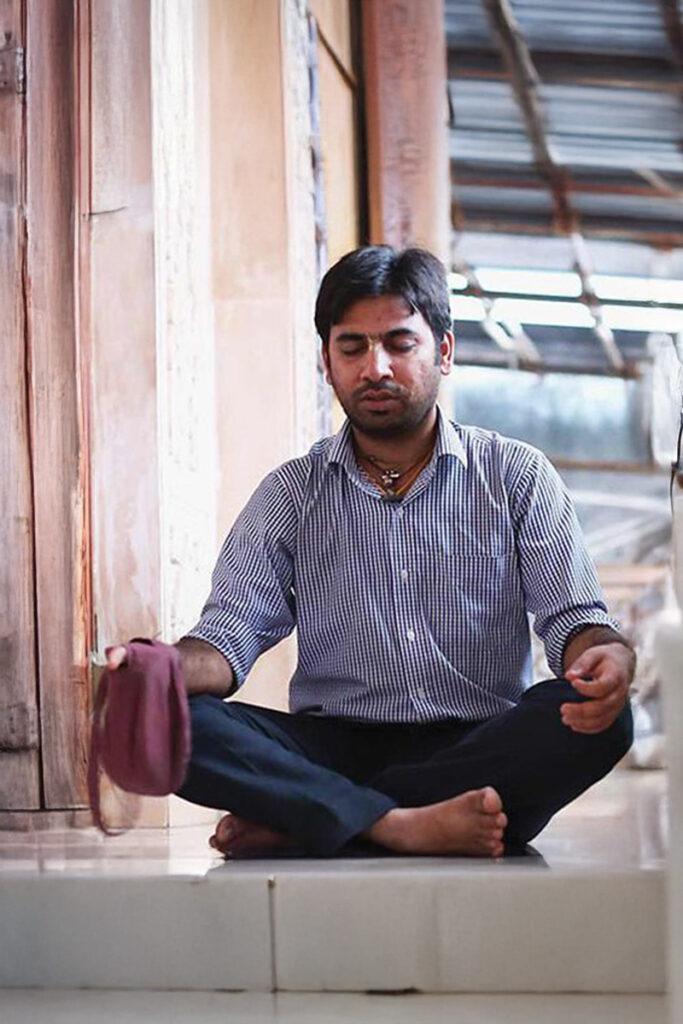
When the jnanendriyas and karmendriyas have been weaned away from contact with objects, the subtle desires of previous indulgence in sense gratification attack the mind in a wild form: this is ekendriya. Since all the sense organs are curbed, now the desires find their vent in the mind. Being the eleventh sense organ, the mind wants to play a dual role in trying to fulfill these desires, and at the same time also experience self-realization. Thus, this obstinate mind needs to be silenced. 


4. Vasikara: Mastery of desire


This is attained when one has overcome all longings, and developed indifference to all types of attachment and non-attachment. 


5.  Paravairagyam: Supreme detachment 


This is the topmost stage where one gets free from even the three modes of material nature — sattva, rajas and tamas. On attaining this state, the sadhaka ceases to be concerned with himself, or with others who remain caught in the web of pleasure. 


These five stages described above can be understood better through an example. Suppose a person who is addicted to drinking coffee wants to get rid of that habit. He consciously keeps himself away from coffee in the beginning, by not bringing coffee sachets or coffee powder home. This is the first step called yatamana or the endeavoring stage. However, the mental desire to drink coffee attacks the person frenetically. Now, the person gives in at regular intervals. Nevertheless, the person takes help from family and somehow or other finally cuts down coffee and also substantially wins over the desire for coffee in his mind. This is congruent to the second and the third stages — vyatireka and ekendriya. Now, the ego of the person comes in by poking the person that he is a “coffee non-drinker.” This means that the ego is still attached to the idea of coffee, although it’s “non-coffee” now. This is a self-conscious virtue. Even so, abstinence over a consistent period of time nearly evacuates the very idea of coffee from the person’s mind. This is the fifth stage of vasikara. Still, the previous impressions of drinking coffee remain in the subtlest form in one’s consciousness, though in a non-provoking and considerably curbed manner now. 


Therefore, it’s an unpalatable truth that the mind is indubitably immensely powerful. Nevertheless, all of us need to gather courage either today or tomorrow in bringing these two pillars of yoga — practice and detachment — to our everyday life, for it is Krishna’s opinion in the immediate next verse that “the mind left unbridled thwarts the very need for self-realization in a person’s heart. On the other hand, that person who endeavors and strives by appropriate means to control the mind is assured of all success.”


Kaustubh Narasimhan hails from a devout Vaishnava family in Melukote, Karnataka. He presently serves as a full-time brahmachari at ISKCON Dharwad under the guidance of His Holiness Bhaktirasamrita Swami Maharaja.
Subscribe to BTG Digital Magazine

Embark on your path to Krishna consciousness with BTG Digital Magazine! Subscribe now and discover inspiring stories of growth, enlightenment, and connection shared by our community.

Subscribe

Practice and Detachment

Practice and Detachment
Listen to Article
Press Play to listen

Keys to success in spiritual life


By Kaustubh Narasimhan


For the mind is so fleeting that I find it easier to conquer the wind than to conquer the mind” said Arjuna in the sixth chapter of the Bhagavad Gita. Arjuna was by no means an ordinary warrior. Being the best student of the great Drona, he had shown beyond doubt to all warriors of the then Bharata that he was unassailable. 


Therefore, this candid and unvarnished confession of such an illustrious combatant throws doubts on the odds of success of a novice in spiritual life. However, an amateur certainly finds appeasing hope in the gaping response of the Supreme Lord Sri Krishna. It’s noteworthy to discern that all our scriptures are perennial fountainheads of everlasting hope. 


Krishna doesn’t simply brush away this crucial and indispensable question of Arjuna but empathizes with him, before giving an immutably apt response. His beginning words are, asamsayam mahabaho mano durnigraham calam: “O mighty-armed warrior, it’s undoubtedly very difficult to curb the restless mind.” These opening words from the Supreme Lord Himself most definitely made Arjuna consider his case not as disparate or unique, but as universal. That is hope as a prelude. Why? Our practical experience follows the popular English phrase “Misery loves company.” A person undergoing an adversity finds relief when he finds that he has others sharing the same story. Nevertheless, Krishna doesn’t want either Arjuna or His devotees to settle with this lame and primitive thought process, and hence he gives us the clue to genuine mind control in the latter half of the same verse: abhyasena tu kaunteya vairagyena ca grihyate: “However, by practice and detachment, you can subdue the mind.”


The two passwords “practice” and “detachment” that Krishna delineates and literally exhorts Arjuna to discharge for comprehensive control over one’s desires in this verse are pivotal for every spiritual practitioner. 


Two Key Aspects In The Yoga-Sutras


An old English saying drives just practice as a requisite for triumph in every sector. While this is certainly true in most spheres of life, success in spiritual life entails much more. Why so?


We can see a compelling parallel to Krishna’s words in the yoga-sutras of Patanjali. Patanjali defines yoga with the words yogas cittavritti-nirodhah: “Yoga is the cessation of movements in consciousness.” (Yoga-sutras 1-2). Now, how can that cessation be achieved? Patanjali gives the path in another sutra. Abhyasa-vairagyabhyam tan nirodhah: “Practice and detachment are the means to still the movements of consciousness.” In their commentaries on this above-mentioned sutra, many acaryas describe the irrevocable need for both of these elements for success. 


Practice is the constructive aspect of yoga, while detachment highlights the negating aspect. Both of these balance each other like day and night, or like inhalation and exhalation. Practice is the path of evolution, while detachment or renunciation is that of involution. Evolutionary process is the onward march towards discovery of the self, while the involutionary path of renunciation is an inward journey that detaches the consciousness from external objects. 


A few sutras ahead, Patanjali describes these elements as niyama and yama. In laymen’s terms, they are nothing but do’s (abhyasa) and don’ts (vairagya). Patanjali also uses an alternative word for abhyasa as anushthana, which indicates a “repeated effort made religiously (not mechanically) with a thorough understanding of the underlying philosophy.” Likewise, vairagya is the discarding of ideas and actions that obstruct progress. Without restraint, the forces generated by practice would spin out of control and hence could destroy the practitioner. However, overemphasis on worldly vairagya without abhyasa could lead to inner decay. Therefore, abhyasa is a building-up process, while vairagya is a process of inner consolidation. 


A practitioner taking to bhakti-yoga while situated in the lower modes of ignorance and passion gradually learns to be free from desires and to cultivate non-attachment to things that obstruct his path. This restraint, though done just externally in the beginning, is momentous for the sadhaka’s inner security as well as his subsequent growth. 


Should Our Practice Be?


Patanjali also mentions the characteristics of efficacious practice in spiritual life. He says, sa tu dirghakala-nairantarya-satkara-asevito dridha-bhumih: “Long, uninterrupted, alert practice is the firm foundation for restraining the fluctuating mind and the senses.” Controlling the mind and the senses is therefore not a bed of roses. Consistent and dedicated efforts over protracted periods of time fuels in one the determination to achieve it. Patience, enthusiasm and accordant energy, as delineated by Srila Rupa Gosvami, are therefore paramount to success.


How Should Our Renunciation be?


The very same Patanjali sutras also delineate the characteristics of vairagya in the sutra, drishtanusravika-vishayavitrishnasya vasikarasanjna vairagyam: “Renunciation is the practice of detachment from desires towards sense objects that are especially perceived through sight and sound.” It’s interesting to note how Patanjali describes sight and sound to be the maximum causes of distraction for any sadhaka. 


The noble acaryas describe five stages in renunciation while commenting on the above mentioned sutra. These stages are particularly important for us to understand: 


1.  Yatamanah: Disengaging the senses from enjoyment


This is the beginning stage wherein a person tries to consciously cease his jnanendriyas (knowledge-acquiring senses) and karmendriyas (working senses) from engaging in their objects of interest. This stage is akin to the phrase tani sarvani samyamya that Krishna describes in the Bhagavad-gita 2.61.


2. Vyatireka: Keeping away from desire 


This is the second stage, where the action point is one’s mind. As one thoughtfully and diligently controls his external senses, he gradually burns away the desires which obstruct one’s onward movement. 


3. Ekendriya: Stilling the mind 


When the jnanendriyas and karmendriyas have been weaned away from contact with objects, the subtle desires of previous indulgence in sense gratification attack the mind in a wild form: this is ekendriya. Since all the sense organs are curbed, now the desires find their vent in the mind. Being the eleventh sense organ, the mind wants to play a dual role in trying to fulfill these desires, and at the same time also experience self-realization. Thus, this obstinate mind needs to be silenced. 


4. Vasikara: Mastery of desire


This is attained when one has overcome all longings, and developed indifference to all types of attachment and non-attachment. 


5.  Paravairagyam: Supreme detachment 


This is the topmost stage where one gets free from even the three modes of material nature — sattva, rajas and tamas. On attaining this state, the sadhaka ceases to be concerned with himself, or with others who remain caught in the web of pleasure. 


These five stages described above can be understood better through an example. Suppose a person who is addicted to drinking coffee wants to get rid of that habit. He consciously keeps himself away from coffee in the beginning, by not bringing coffee sachets or coffee powder home. This is the first step called yatamana or the endeavoring stage. However, the mental desire to drink coffee attacks the person frenetically. Now, the person gives in at regular intervals. Nevertheless, the person takes help from family and somehow or other finally cuts down coffee and also substantially wins over the desire for coffee in his mind. This is congruent to the second and the third stages — vyatireka and ekendriya. Now, the ego of the person comes in by poking the person that he is a “coffee non-drinker.” This means that the ego is still attached to the idea of coffee, although it’s “non-coffee” now. This is a self-conscious virtue. Even so, abstinence over a consistent period of time nearly evacuates the very idea of coffee from the person’s mind. This is the fifth stage of vasikara. Still, the previous impressions of drinking coffee remain in the subtlest form in one’s consciousness, though in a non-provoking and considerably curbed manner now. 


Therefore, it’s an unpalatable truth that the mind is indubitably immensely powerful. Nevertheless, all of us need to gather courage either today or tomorrow in bringing these two pillars of yoga — practice and detachment — to our everyday life, for it is Krishna’s opinion in the immediate next verse that “the mind left unbridled thwarts the very need for self-realization in a person’s heart. On the other hand, that person who endeavors and strives by appropriate means to control the mind is assured of all success.”


Kaustubh Narasimhan hails from a devout Vaishnava family in Melukote, Karnataka. He presently serves as a full-time brahmachari at ISKCON Dharwad under the guidance of His Holiness Bhaktirasamrita Swami Maharaja.