
Char Dhama

The four holy places of India are well known, but the author
wishes to spend time with a different set of “four holy places.”
By Revati Vallabha Dasa
In the year 2005, at 25 years of age, I quit my highly placed software job and joined full-time the ISKCON temple in Chowpatty, Mumbai. My confused parents sought astrological help. Studying my horoscope, the astrologer shared his readings with them, “Your son is one of your ancestors. In his past life he did several times pilgrimage by foot to Badarinatha. In one such pilgrimage he met an accidental death. In this life he is resuming his spiritual journey.”
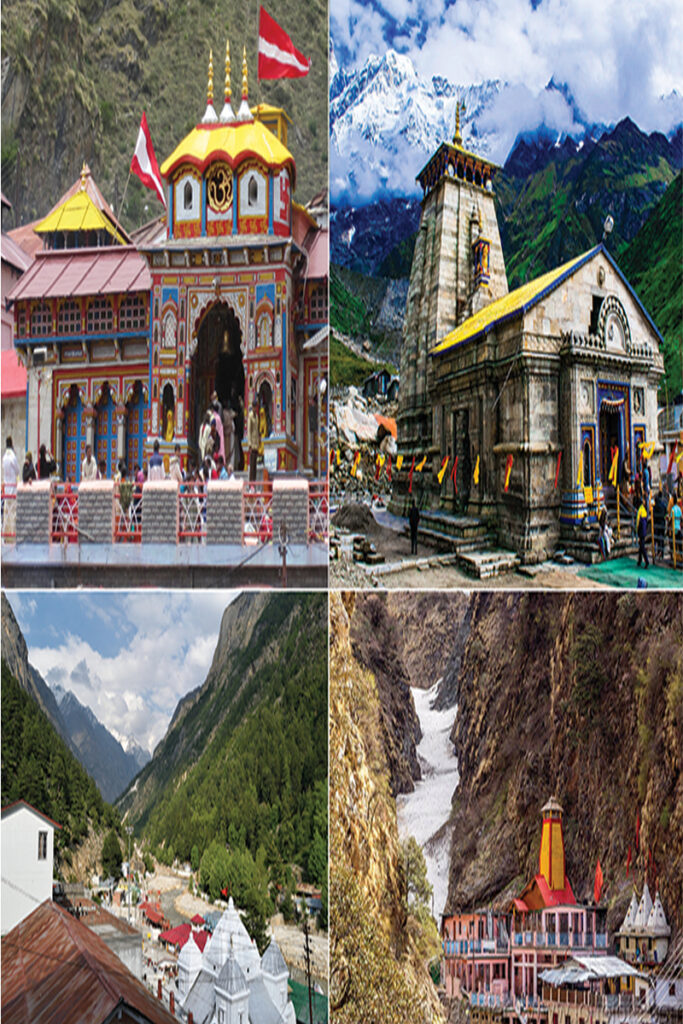
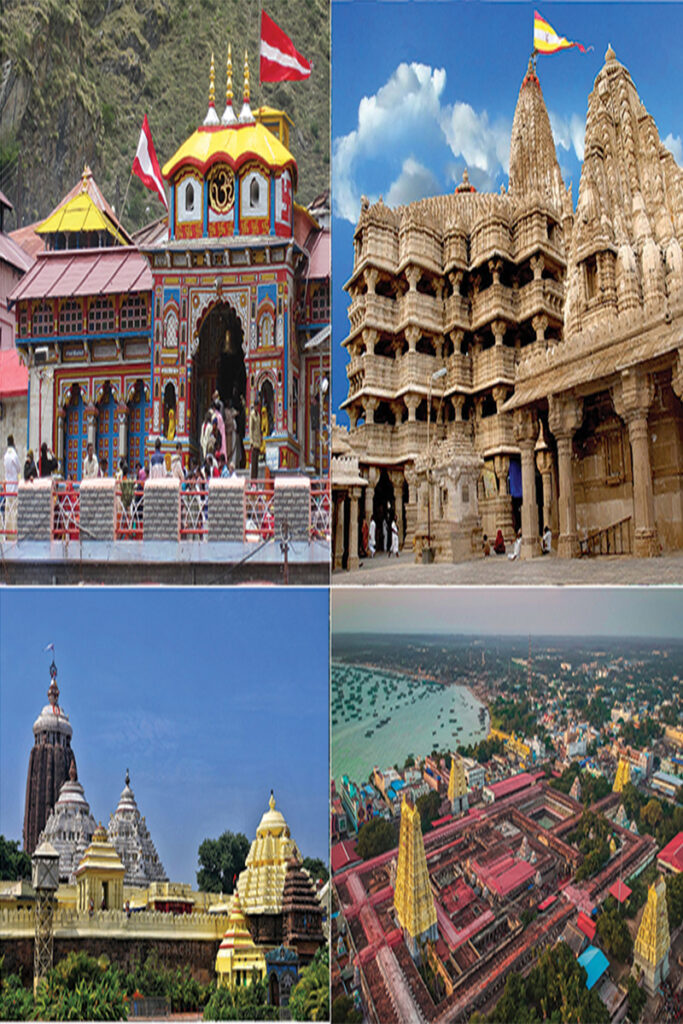
Situated in the Himalayas, Badarinatha is one of the most ancient and prominent temples of Lord Visnu. The Hindi words Char and Dhama respectively mean “four” and “holy places.” So the famous appellation “Char Dhama” refers to “the four prominent holy places of pilgrimage in India.” Sometimes they are referred to as the four holy places in the four directions: Badarinatha in the North, Ramesvaram in the South, Jagannatha Puri in the East and Dvaraka in the West. While this is referred to as the bigger circuit, there is another category of the four holy places in the smaller circuit – Badarinatha, Kedaranatha, Gangotri and Yamunotri – all in the Himalayas. Interestingly, Badarinatha is a part of both the circuits.
The scriptures and the acaryas glorify the potency and the importance of the holy dhamas. I, too, love to visit the holy places and I get inspired there. My Char Dhama, my favorite four holy places, however, are the Bhagavad-gita, Srimad-Bhagavatam, Chaitanya-caritamrita, and The Nectar of Devotion –the four most prominent books that Srila Prabhupada translated and gave wonderful purports to.
Mental Satisfaction
I might have done several pilgrimages to Badarinatha in my last life. In this life, however, even though born and brought up in North India and thus being not very far away from Badarinatha, I haven’t done one yet. And neither do I have a desire to do one.
Srila Prabhupada writes in his purport to Srimad-Bhagavatam 4.6.25, “Srila Narottama dasa Thakura, a great acarya of the Gaudiya Vaishnava Sampradaya, advises us not to travel to different places of pilgrimage. Undoubtedly, it is troublesome to go from one place to another, but one who is intelligent can take shelter of the lotus feet of Govinda and thereby be automatically sanctified as the result of his pilgrimage.”
Narottama dasa Thakura says in his song, tirtha-yatra parisrama, kevala manera bhrama. He says, “To go to the holy places of pilgrimage, it is also a mental satisfaction.” (Lecture on Srimad-Bhagavatam 1.13.10—June 1, 1974, Geneva)
And what can we see of the holy places with these carma-cakshu, our ordinary material eyes, and with our vision filtered by our conditioned mind, intelligence and false ego? What we do see is these dhamas becoming real-estate investment hot-spots and picnic destinations for the opportunists from the neighboring cities. What we do see are alcohol shops. What we do hear is movie songs from multi-storey apartments.
For visiting any of the holy places with one’s family, there are much expenses incurred in travel, accommodation and food. And the journeys are taxing on health too – especially for the old. In several of the holy places in India, the summers are too hot and the winters too cold. And that’s why everyone wants to visit these places in those few months of the year when the weather is suitable. But then at these times these places become overcrowded and expensive. There are chances of knowingly or unknowingly committing aparadhas, offences, in the dhama. Several of the holy places in India, Nepal, etc. are high up in the mountains with steep climbs on narrow roads. A number of devotees have lost their lives in such arduous journeys – I being one such case if the astrologer’s reading is correct. Some devotees have lost their lives due to drowning in holy rivers.
Dhamas are also like a supermarket of numerous gurus and their spiritual organizations. Unfortunately, most of them don’t have practices and philosophical conclusions as presented by our Gaudiya Vaishnava acaryas, especially Srila Prabhupada. Sadly, several devotees have left ISKCON and Srila Prabhupada to join these other groups.
Srila Baladeva Vidyabhushana writes,
nasti citte harir yasya
tasya tirthatanam mudha
asti citte harir yasya
tasya tirthatanam mudha
“For a person who does not have Hari in his consciousness, his wandering around in holy places is useless, and for a person who has Hari in his consciousness, his wandering around in holy places is useless.” — Sahitya-kaumudi 9.3
The above verse doesn’t deny the potency or the importance of holy places. But it is teasingly trying to elucidate that what is even more important is consciousness. Often, we tend to focus more on our externals and knowingly or unknowingly are less aware or give less importance to our internal state. On the path of bhakti, having proper internal consciousness is cardinal. A devotee residing, say in the US or UK, might be always thinking of the holy places in India. While another devotee, say a local of Mayapur or Vrndavana, might be always thinking of visiting and settling in the US or UK. Who is spiritually more advanced?
We will conclude this section with this striking information found in Srila Prabhupada purport to Cc. Madhya 16.281:
The prakrita-sahajiyas proclaim themselves vraja-vasis or dhama-vasis, but they are mainly engaged in sense gratification. Thus they become more and more implicated in the materialistic way of life. Those who are pure devotees in Krishna consciousness condemn their activities. The eternal vraja-vasis like Svarupa Damodara did not even come to Vrindavana-dhama. Sri Pundarika Vidyanidhi, Sri Haridasa Thakura, Srivasa Pandita, Sivananda Sena, Sri Ramananda Raya, Sri Sikhi Mahiti, Sri Madhavidevi and Sri Gadadhara Pandita Gosvami never visited Vrindavana-dhama. Srila Bhaktisiddhanta Sarasvati Thakura points out that we have no authorized documents stating that these exalted personalities visited Vrindavana.
The Four Books
Let me share one more important and interesting information about Badarinatha. It was here at Badarinatha, Badarikasrama to be specific, that Srila Vyasadeva wrote his most important work, the Srimad-Bhagavatam. And we are very fortunate to have received Srimad-Bhagavatam from Srila Prabhupada, the pure and bona fide representative of Vyasa. As a motto to his first-published volume of Srimad-Bhagavatam, Prabhupada writes: “We know that foreign invaders of India could break down some of the monumental architectural works in India, but they were unable to break up the perfect ideals of human civilization so far kept hidden within the Sanskrit language of Vedic wisdom.”
Among the numerous accomplishments of Prabhupada, what stands out as the most prominent and the most significant is his books. And within his books, there are some which he considered especially important.
Pradyumna Dasa: Prabhupada always considered that four books—the Bhagavad-gita, Srimad-Bhagavatam, The Nectar of Devotion, and Sri Chaitanya-caritamrita—were the necessary books. Outside of that, everything was extra. (Srila Prabhupada – Remembrances, Chapter 16)
Sometimes during the yajnas, Prabhupada would have devotees read from these four books at the four corners of the room where the yajna was being held. Prabhupada wrote in a letter to Urvasi Dasi, July 25, 1975, “Read my books very carefully, Bhagavad-gita, then Srimad-Bhagavatam, and then Chaitanya-caritamrita. You should read every day without fail and become fixed in our philosophy.”
The below quote is from a famous and important letter of Srila Prabhupada to Hamsaduta Dasa, December 3, 1968:
Next January there will be an examination on this Bhagavad-gita. Papers will be sent by me to all centers, and those securing the minimum passing grade will be given the title of Bhaktisastri. Similarly, another examination will be held on Lord Chaitanya’s appearance day in February 1970, and it will be upon Srimad-Bhagavatam and Bhagavad-gita. Those passing will get the title of Bhaktivaibhava. Another examination will be held sometime in 1971 on the four books, Bhagavad-gita, Srimad-Bhagavatam, Teachings of Lord Chaitanya, and The Nectar of Devotion. One who will pass this examination will be awarded with the title of Bhaktivedanta. I want all of my spiritual sons and daughters will inherit this title of Bhaktivedanta so that the family transcendental diploma of Bhaktivedanta will continue through the generations… So we should not simply publish these books for reading by outsiders, but our students must be well versed in all of our books so that we can be prepared to defeat all opposing parties in the matter of self-realization.
It is important to note that even at that quite early stage of our movement, the year 1968, Srila Prabhupada had the desire and plans for the systematic study and exams based on his books. By that time Chaitanya-caritamrita was not yet written; so, in the above letter “Teachings of Lord Chaitanya” is mentioned. Later on, once it was published, Prabhupada would always include Chaitanya-caritamrita in the list of the four most important books.
These four books of Srila Prabhupada are my Char Dhama – my four favorite holy places. I find shelter and nourishment in them. And I like to visit them, meaning “read them,” again and again. Of course, I don’t want to just read them. I wish to sincerely practice what I read and then try to also humbly share with others what I read.
These books are like oceans. Although within a few years we may finish reading them and may even clear the exams based on them, this would be like getting some knowledge of the length and the breadth of the ocean. There is more to the ocean though. It would take a lifetime of rereading and proper attitude to go to the depths of the ocean and collect the valuable jewels.
By His Example
Pradyumna Dasa recalls: Prabhupada read his books. Whenever he traveled on the plane, his secretary would carry his books. Prabhupada would say, “Where is the book?” He would read the Gita, or the Bhagavatam, or The Nectar of Devotion. He’d say, “See, I read my own books. Who reads their own books? People don’t read their own books. Therefore, they were not written by me. They were written by Krishna.” (Srila Prabhupada – Remembrances, Chapter 16)
In the same above-quoted chapter of Remembrances, Bhakti-Tirtha Swami too shares a similar memory and the lesson we can learn from it.
Once in Toronto I was guarding Prabhupada’s room. Prabhupada’s door to his sitting room was glass, so while you were guarding him you could look in and watch him as he was doing things. What impressed me most was Prabhupada’s regulated schedule—japa, darshans, and how he read his own books. I thought, “Prabhupada is reading his own books, so how important it is for us to read the books! If even the guru relishes his own books, then we should be relishing and appreciating them even more.”
Let’s end with an interesting and instructive incident from the life of Prabhupada that endeared him to his guru Srila Bhaktisiddhanta Sarasvati Thakura. In the autumn of 1932, when Prabhupada heard that Srila Bhaktisiddhanta was leading a massive pilgrimage around Vrndavana, he briefly broke free from his business at Allahabad to join the pilgrims. Soon after Prabhupada arrived at Kosi, the devotees were given the choice of visiting the nearby Seshasayi Vishnu deity or staying to hear Srila Bhaktisiddhanta. Prabhupada recalls, “At that time I think only ten or twelve men remained….And I thought it wise, ‘What can I see at this Seshasayi? Let me hear what Srila Bhaktisiddhanta Sarasvati will speak. Let me hear.’” (Conversation, March 17, 1973, Mayapur)
For all these years my parents didn’t disclose to me anything about their meeting with the astrologer and his readings. They shared all this only last year when I moved on from the brahmachari-asrama to the grihastha-asrama. Anyway, I’m happy that – as in the brahmachari-asrama, so in the grihastha-asrama – I try to spend quality time with Srila Prabhupada’s books. And I wish and pray to continue doing this for the rest of my life.
Revati Vallabha Dasa, a disciple of His Holiness Radhanatha Swami Maharaja, came to Krishna consciousness in 2001, the year he earned a degree in engineering. He teaches Bhakti-sastri and Bhakti-vaibhava courses. He likes to stay in villages and farm projects.
Subscribe to BTG Digital Magazine
Embark on your path to Krishna consciousness with BTG Digital Magazine! Subscribe now and discover inspiring stories of growth, enlightenment, and connection shared by our community.
Subscribe