The Salt in the Water

Free to Read
12 mins September, 2026
00:00
00:00

Ancient Wisdom for Modern Seekers


Discovering the eternal within the temporary through Svetaketu’s journey

By Vrajabihari Dasa


“O son of Pritha, know that I am the original seed of all existences, the intelligence of the intelligent, and the prowess of all powerful men.”


—Bhagavad-gita 7.10


In our age of information overload, where knowledge seems infinite yet wisdom appears scarce, an ancient story from the Chandogya Upanishad offers profound insight. It asks the most fundamental question of human existence: Beyond all that we can see, hear, and know, who is the Supreme Person that governs everything?


As Albert Einstein once observed, “A human being is part of the whole called by us universe.” This scientific perspective echoes the timeless wisdom embedded in the story of Svetaketu, a tale that reveals how true knowledge is not abstract philosophy but the awakening of our personal relationship with Krishna, the Supreme Personality of Godhead.


The Pride of Incomplete Knowledge


The Chandogya Upanishad, one of the most revered texts of Vedic knowledge, presents us with Svetaketu, son of the sage Uddalaka Aruni. At twelve, Svetaketu was sent to a gurukul—the traditional Indian system of education where students lived with their teacher. After twelve years of rigorous study, he returned home with supreme confidence, declaring to his father that he had mastered all subjects and knew everything worth knowing.


His father, however, was deeply disappointed. Not by his son’s academic achievements, but by the pride and conceit that had blossomed from incomplete understanding. So, he gently broke his son’s pride by revealing through simple analogies that behind all the chaos, change, and variety of this world, there is an eternal essence — the imperishable truth.


His teaching is summarized in the famous phrase “tat tvam asi” — you are that, which is repeated many times in his instructions to his son. The phrase reminds us that we are not the fleeting body or mind, but the eternal soul, part and parcel of the Divine.


The moment when the father decides to educate his son also reflects what the modern philosopher Socrates captured in his famous declaration: “I know that I know nothing.” True wisdom often begins with recognizing the vastness of our ignorance.
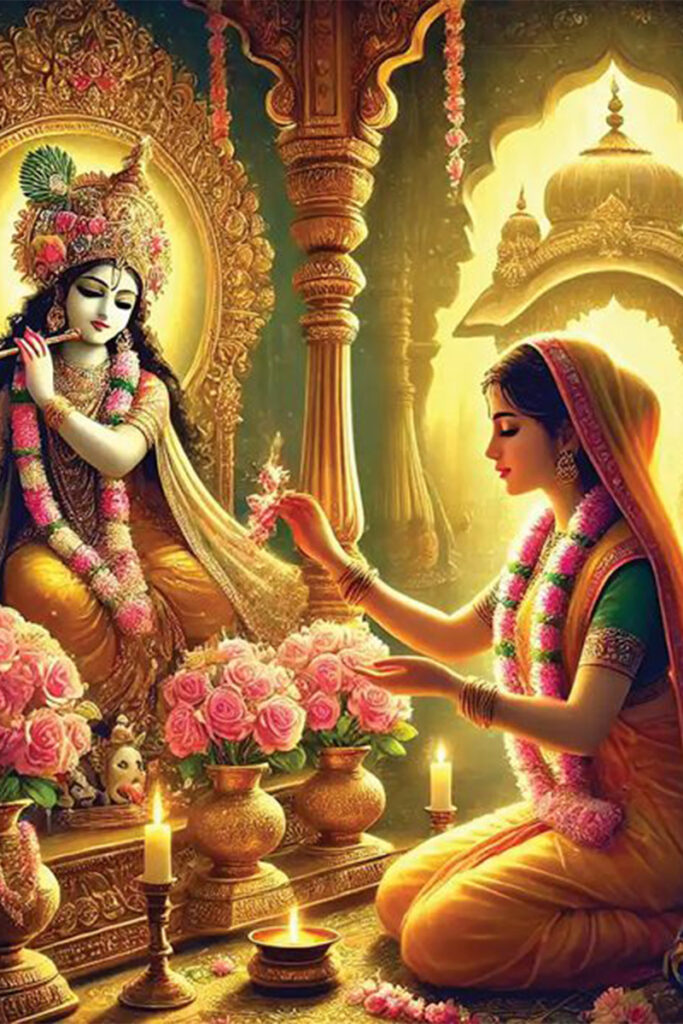


Consider our contemporary world: we carry devices that connect us to virtually all human knowledge, yet we often feel more confused and disconnected than ever. Like Svetaketu, we might mistake information for wisdom, data for understanding.


Uddalaka Aruni asked his son, “Have you learned that by knowing which, all else becomes known? Have you understood the unseen reality behind all that is seen?”


The son, Svetaketu was humbled. “No, Father, I do not know this. Please teach me.”


And so began the lessons.


The Clay Pot Paradigm: Discovering the Supreme Artist


Uddalaka Aruni, wise in the ways of teaching, chose not to lecture his son but to guide him through direct experience and analogies. He began with a simple yet profound example: “This clay produces pots, vessels, and toys, but everything is made of clay. If you know the lump of clay, you can know everything made of clay.”


This teaching method mirrors what we see in modern science. When we understand the basic building blocks—atoms, DNA, or fundamental forces—we begin to comprehend the infinite variety of forms they create. The father continued: “Bracelets, rings, and crowns are just gold shaped differently. Know the gold, and you know all ornaments. Hammers and knives are all iron. The essence is one, though the forms are many. If you know iron, you can know all that is made of iron. Likewise, if you know the essence, you know everything.”


But here the Krishna conscious understanding transcends mere material analysis. Unlike impersonal philosophy that sees only the clay, Krishna consciousness recognizes the Supreme Artist who shapes the clay. The potter is distinct from his pottery, just as Krishna is both the source of all energies and the Supreme Person who directs them.


Svetaketu then asked the crucial question: “What is the essence that pervades everything in creation?”


The answer: Brahman—the eternal, unchanging reality that underlies all existence. As the Upanishad teaches through the famous aphorism Tat tvam asi — “You are that!”— we are not separate from this eternal essence; we are expressions of it.


As bhakti-yogis, we understand that Brahman is not an impersonal void, but the spiritual effulgence emanating from Krishna, the Supreme Personality of Godhead. As the Bhagavad-gita declares: “I am the basis of the impersonal Brahman, which is immortal, imperishable and eternal” (14.27). We are not seeking to merge into this effulgence, but to awaken our loving relationship with its source —Krishna.


The Invisible Life Force


When Svetaketu struggled to accept something he couldn’t see, his father used a vivid analogy of a tree. “Strike a living tree, and sap flows out because life pervades it. When the life force departs, the tree withers and dies. Yet life itself doesn’t die—it simply moves on, eternal and indestructible. That eternal life-force is the atma. And you are that — tat tvam asi.”


This reminds us of the first law of thermodynamics: energy cannot be created or destroyed, only transformed. The life force within us is similarly eternal, taking different forms but never truly perishing.


Think of electricity flowing through a bulb. We see the light, feel the warmth, but we cannot see electricity itself. When the bulb burns out, electricity doesn’t die—it continues to flow, ready to illuminate another bulb. Similarly, consciousness—our essential nature—transcends the temporary vessel of the body.


The Banyan Seed Mystery


Still struggling with the invisible nature of Brahman, Svetaketu, skeptical, asked: “But Father, how can I believe in something I cannot see?”


His father asked him to fetch a banyan fruit and asked him to break open the fruit, then crack open one of its tiny seeds. “What do you see inside?” asked Aruni.


“Nothing, father,” replied Svetaketu.


“Are you certain?”

“Yes, father.”


“Then how,” asked the sage, “from that unseen essence, a massive tree grows? The invisible does not mean unreal. The seed of existence is subtle, yet it manifests into all we see.”


This teaching resonates powerfully in our scientific age. We know that within every seed lies the complete genetic blueprint for the entire plant—invisible to the naked eye yet containing infinite potential. As the biologist Bruce Lipton notes, “We are not victims of our genes, but masters of our fates, able to create lives overflowing with peace, happiness, and love.”


The invisible potential within the seed mirrors the invisible divine potential within each of us.


The Salt Experiment: Tasting Divine Presence


Still doubtful, Svetaketu asked, “How can I experience this truth?”


For the final lesson, Aruni asked Svetaketu to dissolve salt in water overnight. The next morning, the salt was invisible, completely dissolved. Yet when Svetaketu tasted the water—from top, middle, and bottom — saltiness permeated every drop.


“Can you see the salt?” asked the father.


“No, father.”


“But you can taste its presence everywhere.”


This beautiful analogy illustrates how Brahman pervades existence. We cannot see it with our eyes, but we can experience it in the very fact that we are alive, conscious, and capable of growth and understanding. As the Bhagavad-gita states: “I am the taste in water, the light in the moon and sun, the sacred syllable Om in all the Vedas, the sound in ether, and the ability in humans” (7.8). 


A bhakti-yoga practitioner understands this analogy as a revelation of how Krishna’s presence pervades existence while maintaining His distinct personality. The salt doesn’t become the water — it maintains its essence while transforming the entire experience. Similarly, we don’t lose our individuality in Krishna consciousness; we discover our authentic spiritual personality in loving relationship with Krishna.


As Srila Prabhupada, founder-Acharya of the International Society for Krishna Consciousness (ISKCON), beautifully explains, “Krishna consciousness means recognizing that we are Krishna’s eternal parts and parcels, meant for loving exchange, not impersonal merger.”


So, when Uddalaka taught Svetaketu to see the unseen through clay, gold, and salt, we, as devotees, extend that to seeing Krishna in everything. When we taste water, when we see the banyan tree, when we breathe life itself — we can remember that all this is pervaded by Krishna.


This is not impersonalism, where we dissolve into some abstract oneness. Rather, it is the joyful realization that while we are eternal and divine by nature, we are eternally connected as servants to the Supreme Divine — Sri Krishna.


We taste Krishna’s presence through devotional service—through chanting His holy names, remembering His pastimes, and serving His devotees. The Brahma Samhita confirms: “I worship Govinda, the primeval Lord, who is the absolute truth, the cause of all causes” (5.1). This is not mere philosophical understanding, but the awakening of our dormant love for Krishna.


Modern Parallels: The Field of Consciousness


Contemporary physics offers striking parallels to this ancient wisdom of Chandogya Upanishad. Quantum field theory suggests that beneath all matter lies an invisible field of energy and information. As physicist David Bohm observed, “What we call empty space contains an immense background of energy.” This invisible field gives rise to all visible phenomena, much like Brahman gives rise to all creation.


Consider how Wi-Fi signals fill a room. We cannot see them, but they enable connection and communication. Similarly, consciousness may be a fundamental field that enables the experience of life itself.


Living in Krishna Consciousness: The Path of Divine Love


The practical application of this wisdom is what our tradition calls Krishna consciousness — recognizing Krishna’s presence in nature, daily life, and all events while developing a personal relationship with Him. This doesn’t mean passive philosophical acceptance but active cultivation of divine love through bhakti-yoga.


When we observe a sunset, we can appreciate both its temporary beauty and Krishna, the eternal source of all light and energy. When we interact with others, we can see beyond their temporary material bodies to their eternal spiritual essence as Krishna’s beloved parts and parcels. As the scriptures teach: “Everything animate or inanimate that is within the universe is controlled and owned by the Lord” (Isopanishad, Mantra 1).


We don’t seek to escape the world, but to see Krishna’s hand in everything. Every breath becomes a prayer when we remember Krishna. Krishna consciousness transforms ordinary activities into devotional offerings when performed for Krishna’s pleasure rather than our own sense gratification.


The Paradox of Divine Servitorship


This understanding creates a beautiful paradox that distinguishes Krishna consciousness from impersonal philosophy. Recognizing our spiritual nature (aham brahmasmi — “I am spirit soul”) simultaneously establishes our eternal position as Krishna’s loving servants. We are not seeking to become God, but to become God’s beloved servants.


Why does this realization make us humble rather than proud? Because we understand that we are infinitesimally small, yet eternally significant parts of Krishna’s unlimited spiritual energy. We are like individual rays of the sun—qualitatively one with the sun’s light, yet quantitatively tiny compared to the sun itself.


This “nectar of insignificance” transforms our relationship with life. Instead of ego-driven struggle for false lordship, we find transcendental joy in loving service. As the tradition teaches, daso ’ham — “I am a servant”— not from material lowliness, but from the sublime recognition that serving Krishna is our eternal constitutional position and the source of unlimited spiritual pleasure.


True Krishna consciousness flourishes in service, not in the illusion of becoming the served. Our eternal constitutional position is as loving participants in Krishna’s divine pastimes, not as competitors for His position.


Modern psychology echoes this wisdom. Research shows that people who experience a sense of “cosmic insignificance”— recognizing their small place in the universe— actually report greater life satisfaction and meaning. Paradoxically, feeling small makes us feel more connected to something larger than ourselves.


The Practice:  Tasting the Salt


How do we taste this saltiness of Brahman in our daily lives? Through mindful awareness of the life force that animates everything around us. When you breathe, recognize the invisible intelligence that coordinates this complex process without your conscious effort. When you witness the incredible orchestration of a single cell dividing or a flower blooming, sense the invisible order that makes such miracles possible.


As Rumi, the great mystic poet, wrote: “You are not just the drop in the ocean, but the entire ocean in each drop.” This captures the essence of tat tvam asi — you are not separate from the whole; you are the whole expressing itself as an individual and having a loving relationship with the whole!


Conclusion: The Eternal in the Temporary


The story of Svetaketu offers timeless guidance for modern seekers. In a world that constantly changes — where technologies evolve rapidly, relationships shift, and certainties crumble — we can find peace by connecting to what remains constant: the consciousness that witnesses all change.


This doesn’t require us to retreat from the world but to engage with it more fully, seeing the divine play in every moment. Whether we call it Brahman, Krishna, cosmic consciousness, or simply the mystery of existence itself, recognizing our connection to this eternal reality transforms ordinary life into an extraordinary spiritual journey.


As we navigate our complex modern world, we can carry the wisdom of the salt experiment with us: though we cannot see the essence that pervades everything, we can taste its presence in every moment of conscious awareness. In doing so, we live the profound truth that our ancestors discovered thousands of years ago—we are not separate from the infinite; we are expressions of it, both divine in our essence and humble in our service to the whole.


Tat tvam asi — “You are that.” This is not just philosophy; it is the recognition of our deepest truth, available to be experienced in every conscious moment of our lives.


The Nectar of Insignificance


The modern world often tells us, “You are special, you are everything.” But real happiness is discovered in the opposite — in realizing our smallness before the greatness of God.


C.S. Lewis once wrote, “Humility is not thinking less of yourself, but thinking of yourself less.” In Krishna consciousness, we experience this humility as nectar — the nectar of insignificance. I am tiny, fleeting, fragile, yet connected to the Infinite. I belong to Him.


The Upanishads say, aham brahmasmi — “I am spirit, not matter.” But our tradition completes it with daso ’ham — “I am Krishna’s servant.” And ultimately, as Sri Chaitanya Mahaprabhu taught, our truest identity is: dasanudasah — “servant of the servant of the servant of the Lord of the gopis.”


Svetaketu’s journey is ours. We may learn much, achieve much, and pride ourselves on knowledge, but until we discover the unseen essence — the eternal soul in relationship with Krishna — our learning is incomplete.


Like the salt dissolved in water, Krishna pervades everything. Our task is to taste that saltiness in all of life — to see Him in nature, in relationships, in struggles, and in joys.


And when we do, we become truly wise — humble servants who, in the midst of life’s changing waves, rest on the eternal truth of belonging to Krishna.


Vraja Bihari Dasa holds a post-graduate degree in International Finance and an MBA from Mumbai University. He is a resident monk at ISKCON Chowpatty and an active teacher of bhakti-yoga. Visit his website: www.yogaformodernage.com

Subscribe to BTG Digital Magazine

Embark on your path to Krishna consciousness with BTG Digital Magazine! Subscribe now and discover inspiring stories of growth, enlightenment, and connection shared by our community.

Subscribe

The Salt in the Water

The Salt in the Water
Listen to Article
Press Play to listen

Ancient Wisdom for Modern Seekers


Discovering the eternal within the temporary through Svetaketu’s journey

By Vrajabihari Dasa


“O son of Pritha, know that I am the original seed of all existences, the intelligence of the intelligent, and the prowess of all powerful men.”


—Bhagavad-gita 7.10


In our age of information overload, where knowledge seems infinite yet wisdom appears scarce, an ancient story from the Chandogya Upanishad offers profound insight. It asks the most fundamental question of human existence: Beyond all that we can see, hear, and know, who is the Supreme Person that governs everything?


As Albert Einstein once observed, “A human being is part of the whole called by us universe.” This scientific perspective echoes the timeless wisdom embedded in the story of Svetaketu, a tale that reveals how true knowledge is not abstract philosophy but the awakening of our personal relationship with Krishna, the Supreme Personality of Godhead.


The Pride of Incomplete Knowledge


The Chandogya Upanishad, one of the most revered texts of Vedic knowledge, presents us with Svetaketu, son of the sage Uddalaka Aruni. At twelve, Svetaketu was sent to a gurukul—the traditional Indian system of education where students lived with their teacher. After twelve years of rigorous study, he returned home with supreme confidence, declaring to his father that he had mastered all subjects and knew everything worth knowing.


His father, however, was deeply disappointed. Not by his son’s academic achievements, but by the pride and conceit that had blossomed from incomplete understanding. So, he gently broke his son’s pride by revealing through simple analogies that behind all the chaos, change, and variety of this world, there is an eternal essence — the imperishable truth.


His teaching is summarized in the famous phrase “tat tvam asi” — you are that, which is repeated many times in his instructions to his son. The phrase reminds us that we are not the fleeting body or mind, but the eternal soul, part and parcel of the Divine.


The moment when the father decides to educate his son also reflects what the modern philosopher Socrates captured in his famous declaration: “I know that I know nothing.” True wisdom often begins with recognizing the vastness of our ignorance.


Consider our contemporary world: we carry devices that connect us to virtually all human knowledge, yet we often feel more confused and disconnected than ever. Like Svetaketu, we might mistake information for wisdom, data for understanding.


Uddalaka Aruni asked his son, “Have you learned that by knowing which, all else becomes known? Have you understood the unseen reality behind all that is seen?”


The son, Svetaketu was humbled. “No, Father, I do not know this. Please teach me.”


And so began the lessons.


The Clay Pot Paradigm: Discovering the Supreme Artist


Uddalaka Aruni, wise in the ways of teaching, chose not to lecture his son but to guide him through direct experience and analogies. He began with a simple yet profound example: “This clay produces pots, vessels, and toys, but everything is made of clay. If you know the lump of clay, you can know everything made of clay.”


This teaching method mirrors what we see in modern science. When we understand the basic building blocks—atoms, DNA, or fundamental forces—we begin to comprehend the infinite variety of forms they create. The father continued: “Bracelets, rings, and crowns are just gold shaped differently. Know the gold, and you know all ornaments. Hammers and knives are all iron. The essence is one, though the forms are many. If you know iron, you can know all that is made of iron. Likewise, if you know the essence, you know everything.”


But here the Krishna conscious understanding transcends mere material analysis. Unlike impersonal philosophy that sees only the clay, Krishna consciousness recognizes the Supreme Artist who shapes the clay. The potter is distinct from his pottery, just as Krishna is both the source of all energies and the Supreme Person who directs them.


Svetaketu then asked the crucial question: “What is the essence that pervades everything in creation?”


The answer: Brahman—the eternal, unchanging reality that underlies all existence. As the Upanishad teaches through the famous aphorism Tat tvam asi — “You are that!”— we are not separate from this eternal essence; we are expressions of it.


As bhakti-yogis, we understand that Brahman is not an impersonal void, but the spiritual effulgence emanating from Krishna, the Supreme Personality of Godhead. As the Bhagavad-gita declares: “I am the basis of the impersonal Brahman, which is immortal, imperishable and eternal” (14.27). We are not seeking to merge into this effulgence, but to awaken our loving relationship with its source —Krishna.


The Invisible Life Force


When Svetaketu struggled to accept something he couldn’t see, his father used a vivid analogy of a tree. “Strike a living tree, and sap flows out because life pervades it. When the life force departs, the tree withers and dies. Yet life itself doesn’t die—it simply moves on, eternal and indestructible. That eternal life-force is the atma. And you are that — tat tvam asi.”


This reminds us of the first law of thermodynamics: energy cannot be created or destroyed, only transformed. The life force within us is similarly eternal, taking different forms but never truly perishing.


Think of electricity flowing through a bulb. We see the light, feel the warmth, but we cannot see electricity itself. When the bulb burns out, electricity doesn’t die—it continues to flow, ready to illuminate another bulb. Similarly, consciousness—our essential nature—transcends the temporary vessel of the body.


The Banyan Seed Mystery


Still struggling with the invisible nature of Brahman, Svetaketu, skeptical, asked: “But Father, how can I believe in something I cannot see?”


His father asked him to fetch a banyan fruit and asked him to break open the fruit, then crack open one of its tiny seeds. “What do you see inside?” asked Aruni.


“Nothing, father,” replied Svetaketu.


“Are you certain?”

“Yes, father.”


“Then how,” asked the sage, “from that unseen essence, a massive tree grows? The invisible does not mean unreal. The seed of existence is subtle, yet it manifests into all we see.”


This teaching resonates powerfully in our scientific age. We know that within every seed lies the complete genetic blueprint for the entire plant—invisible to the naked eye yet containing infinite potential. As the biologist Bruce Lipton notes, “We are not victims of our genes, but masters of our fates, able to create lives overflowing with peace, happiness, and love.”


The invisible potential within the seed mirrors the invisible divine potential within each of us.


The Salt Experiment: Tasting Divine Presence


Still doubtful, Svetaketu asked, “How can I experience this truth?”


For the final lesson, Aruni asked Svetaketu to dissolve salt in water overnight. The next morning, the salt was invisible, completely dissolved. Yet when Svetaketu tasted the water—from top, middle, and bottom — saltiness permeated every drop.


“Can you see the salt?” asked the father.


“No, father.”


“But you can taste its presence everywhere.”


This beautiful analogy illustrates how Brahman pervades existence. We cannot see it with our eyes, but we can experience it in the very fact that we are alive, conscious, and capable of growth and understanding. As the Bhagavad-gita states: “I am the taste in water, the light in the moon and sun, the sacred syllable Om in all the Vedas, the sound in ether, and the ability in humans” (7.8). 


A bhakti-yoga practitioner understands this analogy as a revelation of how Krishna’s presence pervades existence while maintaining His distinct personality. The salt doesn’t become the water — it maintains its essence while transforming the entire experience. Similarly, we don’t lose our individuality in Krishna consciousness; we discover our authentic spiritual personality in loving relationship with Krishna.


As Srila Prabhupada, founder-Acharya of the International Society for Krishna Consciousness (ISKCON), beautifully explains, “Krishna consciousness means recognizing that we are Krishna’s eternal parts and parcels, meant for loving exchange, not impersonal merger.”


So, when Uddalaka taught Svetaketu to see the unseen through clay, gold, and salt, we, as devotees, extend that to seeing Krishna in everything. When we taste water, when we see the banyan tree, when we breathe life itself — we can remember that all this is pervaded by Krishna.


This is not impersonalism, where we dissolve into some abstract oneness. Rather, it is the joyful realization that while we are eternal and divine by nature, we are eternally connected as servants to the Supreme Divine — Sri Krishna.


We taste Krishna’s presence through devotional service—through chanting His holy names, remembering His pastimes, and serving His devotees. The Brahma Samhita confirms: “I worship Govinda, the primeval Lord, who is the absolute truth, the cause of all causes” (5.1). This is not mere philosophical understanding, but the awakening of our dormant love for Krishna.


Modern Parallels: The Field of Consciousness


Contemporary physics offers striking parallels to this ancient wisdom of Chandogya Upanishad. Quantum field theory suggests that beneath all matter lies an invisible field of energy and information. As physicist David Bohm observed, “What we call empty space contains an immense background of energy.” This invisible field gives rise to all visible phenomena, much like Brahman gives rise to all creation.


Consider how Wi-Fi signals fill a room. We cannot see them, but they enable connection and communication. Similarly, consciousness may be a fundamental field that enables the experience of life itself.


Living in Krishna Consciousness: The Path of Divine Love


The practical application of this wisdom is what our tradition calls Krishna consciousness — recognizing Krishna’s presence in nature, daily life, and all events while developing a personal relationship with Him. This doesn’t mean passive philosophical acceptance but active cultivation of divine love through bhakti-yoga.


When we observe a sunset, we can appreciate both its temporary beauty and Krishna, the eternal source of all light and energy. When we interact with others, we can see beyond their temporary material bodies to their eternal spiritual essence as Krishna’s beloved parts and parcels. As the scriptures teach: “Everything animate or inanimate that is within the universe is controlled and owned by the Lord” (Isopanishad, Mantra 1).


We don’t seek to escape the world, but to see Krishna’s hand in everything. Every breath becomes a prayer when we remember Krishna. Krishna consciousness transforms ordinary activities into devotional offerings when performed for Krishna’s pleasure rather than our own sense gratification.


The Paradox of Divine Servitorship


This understanding creates a beautiful paradox that distinguishes Krishna consciousness from impersonal philosophy. Recognizing our spiritual nature (aham brahmasmi — “I am spirit soul”) simultaneously establishes our eternal position as Krishna’s loving servants. We are not seeking to become God, but to become God’s beloved servants.


Why does this realization make us humble rather than proud? Because we understand that we are infinitesimally small, yet eternally significant parts of Krishna’s unlimited spiritual energy. We are like individual rays of the sun—qualitatively one with the sun’s light, yet quantitatively tiny compared to the sun itself.


This “nectar of insignificance” transforms our relationship with life. Instead of ego-driven struggle for false lordship, we find transcendental joy in loving service. As the tradition teaches, daso ’ham — “I am a servant”— not from material lowliness, but from the sublime recognition that serving Krishna is our eternal constitutional position and the source of unlimited spiritual pleasure.


True Krishna consciousness flourishes in service, not in the illusion of becoming the served. Our eternal constitutional position is as loving participants in Krishna’s divine pastimes, not as competitors for His position.


Modern psychology echoes this wisdom. Research shows that people who experience a sense of “cosmic insignificance”— recognizing their small place in the universe— actually report greater life satisfaction and meaning. Paradoxically, feeling small makes us feel more connected to something larger than ourselves.


The Practice:  Tasting the Salt


How do we taste this saltiness of Brahman in our daily lives? Through mindful awareness of the life force that animates everything around us. When you breathe, recognize the invisible intelligence that coordinates this complex process without your conscious effort. When you witness the incredible orchestration of a single cell dividing or a flower blooming, sense the invisible order that makes such miracles possible.


As Rumi, the great mystic poet, wrote: “You are not just the drop in the ocean, but the entire ocean in each drop.” This captures the essence of tat tvam asi — you are not separate from the whole; you are the whole expressing itself as an individual and having a loving relationship with the whole!


Conclusion: The Eternal in the Temporary


The story of Svetaketu offers timeless guidance for modern seekers. In a world that constantly changes — where technologies evolve rapidly, relationships shift, and certainties crumble — we can find peace by connecting to what remains constant: the consciousness that witnesses all change.


This doesn’t require us to retreat from the world but to engage with it more fully, seeing the divine play in every moment. Whether we call it Brahman, Krishna, cosmic consciousness, or simply the mystery of existence itself, recognizing our connection to this eternal reality transforms ordinary life into an extraordinary spiritual journey.


As we navigate our complex modern world, we can carry the wisdom of the salt experiment with us: though we cannot see the essence that pervades everything, we can taste its presence in every moment of conscious awareness. In doing so, we live the profound truth that our ancestors discovered thousands of years ago—we are not separate from the infinite; we are expressions of it, both divine in our essence and humble in our service to the whole.


Tat tvam asi — “You are that.” This is not just philosophy; it is the recognition of our deepest truth, available to be experienced in every conscious moment of our lives.


The Nectar of Insignificance


The modern world often tells us, “You are special, you are everything.” But real happiness is discovered in the opposite — in realizing our smallness before the greatness of God.


C.S. Lewis once wrote, “Humility is not thinking less of yourself, but thinking of yourself less.” In Krishna consciousness, we experience this humility as nectar — the nectar of insignificance. I am tiny, fleeting, fragile, yet connected to the Infinite. I belong to Him.


The Upanishads say, aham brahmasmi — “I am spirit, not matter.” But our tradition completes it with daso ’ham — “I am Krishna’s servant.” And ultimately, as Sri Chaitanya Mahaprabhu taught, our truest identity is: dasanudasah — “servant of the servant of the servant of the Lord of the gopis.”


Svetaketu’s journey is ours. We may learn much, achieve much, and pride ourselves on knowledge, but until we discover the unseen essence — the eternal soul in relationship with Krishna — our learning is incomplete.


Like the salt dissolved in water, Krishna pervades everything. Our task is to taste that saltiness in all of life — to see Him in nature, in relationships, in struggles, and in joys.


And when we do, we become truly wise — humble servants who, in the midst of life’s changing waves, rest on the eternal truth of belonging to Krishna.


Vraja Bihari Dasa holds a post-graduate degree in International Finance and an MBA from Mumbai University. He is a resident monk at ISKCON Chowpatty and an active teacher of bhakti-yoga. Visit his website: www.yogaformodernage.com