


Making Foes into Friend
By Devasekhara Vishnu Dasa
The journey of self-realization is often portrayed as a struggle against external forces, yet the most formidable obstacles often reside within us. The Vedic scriptures eloquently identify these internal adversaries as the shad-ripu, or the six enemies of the mind: kama (lust), krodha (anger), lobha (greed), moha (attachment), mada (pride), and Matsarya (envy). These inherent tendencies, left unchecked, bind us to the material world, hindering our spiritual ascent. However, Vaishnava philosophy offers a profound perspective: these very energies, though potentially destructive, can be transformed into potent allies on the path of devotion to the Supreme Lord. As beautifully encapsulated by, Adi Shankaracharya, in his Vairagya Dindima:
kamah krodhas ca lobhas ca mado mohas ca matsarah
na jitah shadime yena tasya santir na sidhyati
This verse emphasizes that “One who cannot conquer lust (kama), anger (krodha), greed (lobha), pride (mada), delusion (moha), and envy (matsarya) can never attain peace.” While seemingly advocating for their complete annihilation, a deeper Vaishnava understanding reveals the possibility of redirecting and repurposing these inherent energies.
Srila Prabhupada, repeatedly emphasized the need to conquer these internal enemies to advance in spiritual life. He explains that these vices are not separate entities, but rather symptoms of our absorption in material consciousness. For example, he states, “The more a person is freed from lust, anger and greed, the more his existence becomes pure.” He further elaborates that these material desires are like thorns in the heart, constantly disturbing our peace.
The Bhagavad-gita, the essence of Vedic knowledge, provides profound insight into the nature of these vices and the path to overcoming them. Lord Krishna instructs Arjuna,
tri-vidham narakasyedam
dvaram nasanam atmanah
kamah krodhas tatha lobhas
tasmad etat trayam tyajet
“There are three gates leading to this hell—lust, anger and greed. Every sane man should give these up, for they lead to the degradation of the soul.”
This verse highlights the destructive nature of these three primary vices, emphasizing their role as gateways to a degraded existence. However. Krishna guides us toward cultivating detachment from material desires by developing a higher taste for spiritual activities, as mentioned in Bhagavad-gita 2.59: “The embodied soul may be restricted from sense enjoyment, though the taste for sense objects remains. But, ceasing such engagements by experiencing a higher taste, he is fixed in consciousness.”
This article explores how, through teachings the Ramayana, we can embark on a journey of internal alchemy, converting these six vices into virtues that propel us towards genuine spiritual advancement. We will delve into illuminating examples from the sacred epic, the Ramayana, witnessing the contrasting outcomes of those who succumbed to these negative tendencies and those who, through their connection to the Divine, transcended them.
Transforming kama (desires) into nishkama (desirelessness)
Kama, or lust, is a powerful force driving material gratification and represents the intense longing for sense enjoyment. However, this inherent desire can be purified and transformed into nishkama (selfless desire or desire for the Lord’s pleasure). A vivid illustration of this transformation, or lack thereof, is found in the Ramayana’s narrative of Ravana and Vibhishana. Ravana, the mighty king of Lanka, succumbed to unbridled lust for Sita, Lord Rama’s chaste wife. Despite repeated warnings from his well-wishers, Ravana’s attachment to Sita remained unchecked. This unchecked lust led him to abduct her, ignoring the principles of dharma and inviting the wrath of the divine. His actions plunged his kingdom into war with Lord Rama and ultimately resulted in his downfall and destruction.
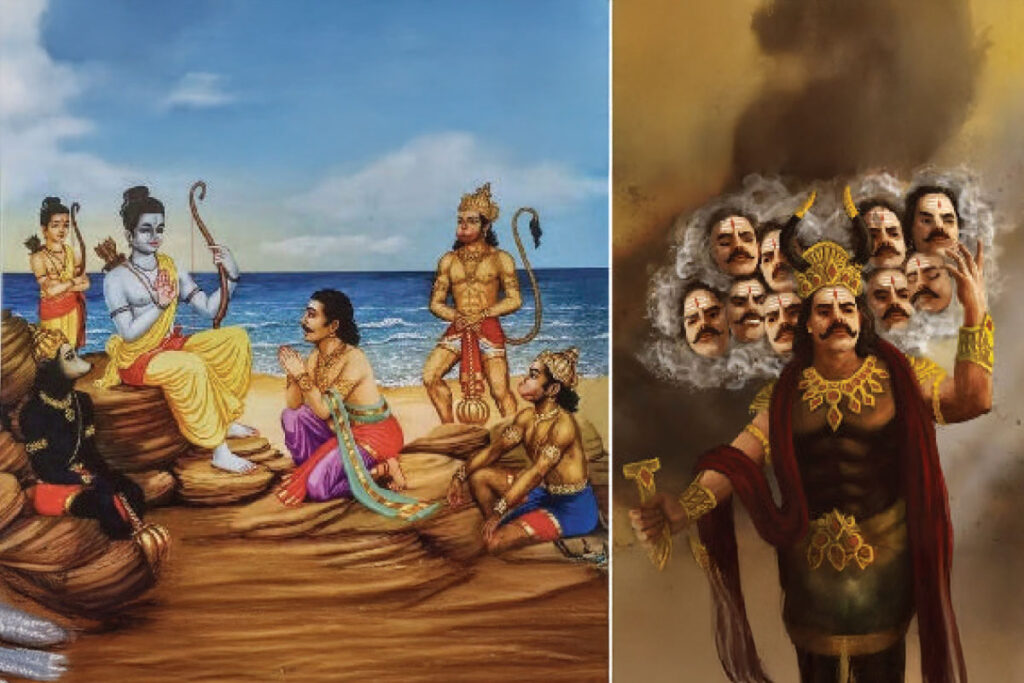
Vibhishana, in stark contrast, also possessed strong feelings towards Rama, but his “lust” or strong desire was to serve the Lord. Vibhishana chose righteousness over familial loyalty. He sought refuge with Lord Rama and actively assisted him in the war against Ravana. His desire to serve the Lord was not driven by selfish ambition but by adherence to dharma. Vibhishana’s desire became nishkama, or selfless, when it was attached to serving the Lord, and he was eventually crowned the King of Lanka by Rama, demonstrating the transformative power of directed desire. While Ravana’s immoral attachment to Sita led to his complete annihilation, Vibhishana’s devotional attachment to Rama secured his kingship of Lanka and eternal glory. This stark contrast highlights the critical difference between actions driven by selfish lust and those propelled by selfless devotion, even when dealing with intense internal desires.
Transforming krodha (anger) into dhairya (patience)
Anger often arises from unfulfilled desires and manifests as a destructive force, leading to bitterness. However, even anger can be spiritualized. A devotee can direct righteous anger towards those who blaspheme the Lord or His devotees. A person passionate about social justice, for instance, might feel anger at injustice, but this anger can be channelled into constructive efforts to uphold dharma (righteousness) and protect the innocent.
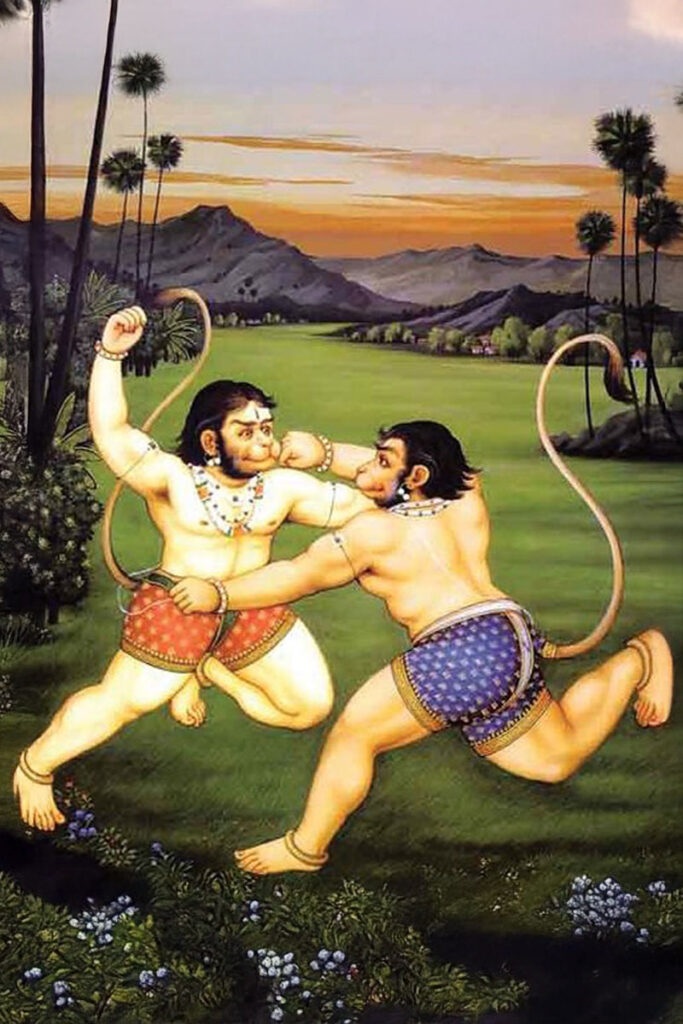
The story of Vali and Sugriva vividly illustrates the consequences of uncontrolled anger and the benefits of patience. Vali, consumed by anger and resentment towards his brother Sugriva over a misunderstanding, banished him and unlawfully took his wife, Ruma. Sugriva, exiled and wronged, later formed an alliance with Lord Rama, who was searching for his abducted wife Sita.
When Sugriva, with Rama’s backing, challenged Vali to a duel, Vali’s anger proved to be his undoing. Disregarding the wise counsel of his wife Tara, Vali rushed into battle in a fit of rage. His uncontrolled fury blinded him to reason and caution. Ultimately, Vali was killed by Lord Rama, and his kingdom was lost.
In stark contrast, Sugriva, despite having every reason to be consumed by anger towards Vali, associated himself with Lord Rama and followed His divine guidance. He exhibited patience (dhairya) even after being initially defeated by Vali and seeking assistance from Rama. This patience allowed him to strategize and act under the Lord’s direction. As a result, Sugriva not only regained his wife and kingdom but also found glory as a trusted ally of Lord Rama. This stark contrast demonstrates that if one’s krodha is not allowed to fester and drive irrational actions but rather is channelled into serving the Lord and adhering to righteous principles, it can be transformed into the strength of patience (dhairya), bringing beneficial outcomes instead of ruin.
Transforming lobha (greed) into santosha (contentment)
The vice of lobha, or greed, is an insatiable craving which can corrupt values, disrupt relationships, and cause profound suffering. It can blind individuals to the consequences of their actions, harming themselves and those around them, while its opposite, contentment (santosha), can bring peace and lasting fulfilment.
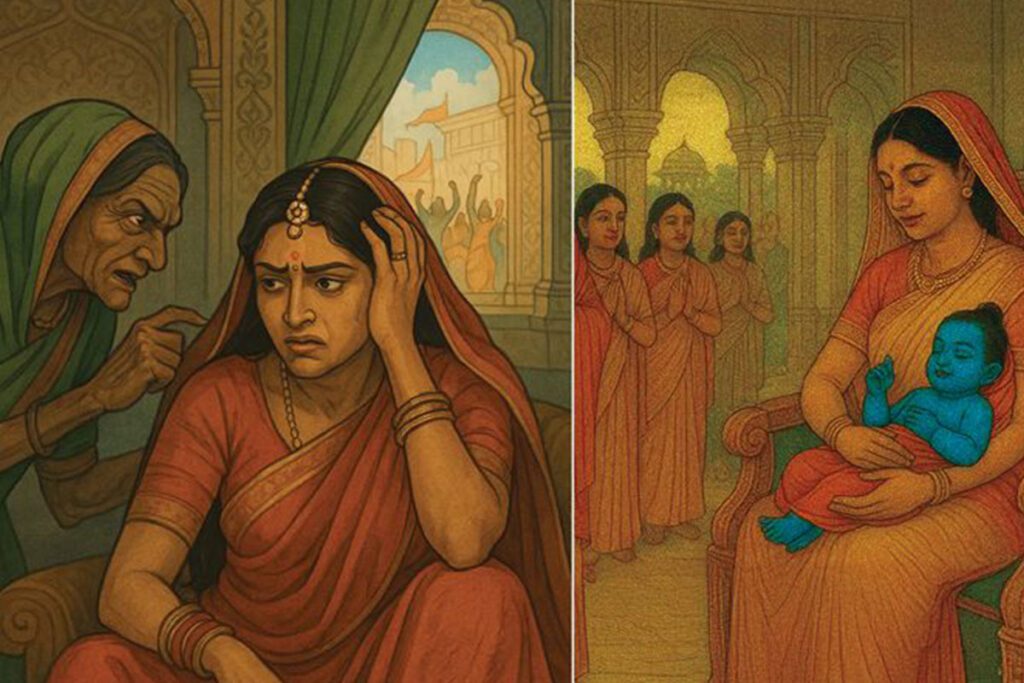
Queen Kaikeyi, once so dear to King Dasaratha, tragically fell prey to the venom of lobha. The cunning words of her maid Manthara, driven by her own selfish motives, slowly corrupted Kaikeyi’s heart. She reminded Kaikeyi of the two boons King Dasaratha had granted her years ago. Blinded by this insidious counsel and a possessive desire to see Bharata on the throne, Kaikeyi demanded the fulfilment of those boons: Rama’s fourteen-year exile and Bharata’s immediate coronation. This act of self-centered lobha plunged King Dasaratha into unimaginable grief, leading to his death. Kaikeyi lost the respect and love of her own son, Bharata, who strongly denounced her actions, and she became a figure of scorn throughout Ayodhya. Her single-minded pursuit of power through lobha brought only sorrow and infamy.
In profound contrast, Queen Kausalya, Rama’s mother, faced the same devastating news with remarkable contentment (santosha). When confronted with Rama’s exile and her husband’s sorrow, Kausalya chose acceptance. She did not obstruct Rama’s departure, she aligned her will with what she understood to be the divine plan, maintaining her dignity and grace. This demonstrates that when our deep desires (lobha), even those born of love, are surrendered to a higher purpose and aligned with the Lord’s will, they transform into contentment. Her story highlights how devotion can transmute the vice of greed into the virtue of contentment.
Transforming moha (attachment) into virakti (detachment)
Moha, or attachment, can cloud our judgment and bind us to the impermanent. It often causes us to prioritize fleeting relationships or possessions over truth and righteousness, leading to profound sorrow and regret. This inability to see things as they truly are, to distinguish between the eternal and the temporary, makes moha a formidable obstacle to spiritual liberation.
The story of Kumbhakarna, Ravana’s formidable brother, offers a stark illustration of the perils of such attachment. When awakened from his six-month slumber, he was informed of the war with Rama and Ravana’s dire need for assistance. Kumbhakarna, known for his wisdom, immediately grasped the gravity of the situation. He was fully aware of Ravana’s egregious error in abducting Sita and waging war against the righteous Rama. He even had the integrity to advise Ravana to return Sita and apologize to Rama, However, despite this clear understanding of right and wrong, Kumbhakarna remained bound by a deep-seated familial attachment and affection for his brother and his homeland, Lanka. This powerful moha overrode his rationality and sense of righteousness. This unwavering loyalty, though seemingly admirable on one level, led him to fight against the forces of righteousness and ultimately resulted in his demise at Rama’s hands. Kumbhakarna’s fate underscores the danger of allowing attachments to cloud judgment and lead one down a path contrary to dharma, even when one knows it is wrong.
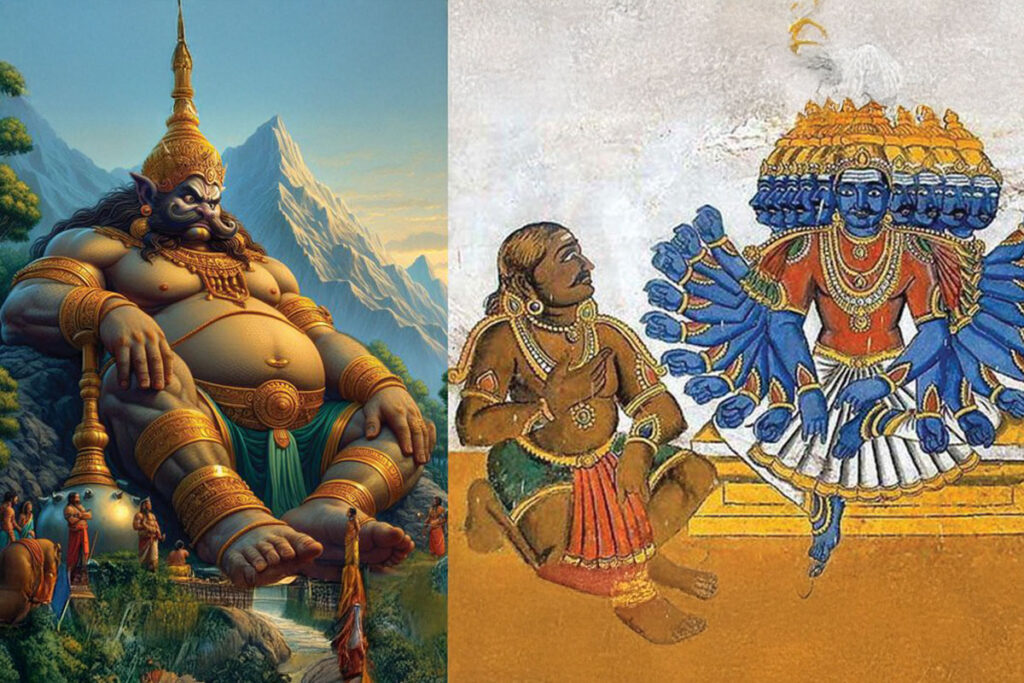
In a different light, the story of Marica, Ravana’s maternal uncle and a powerful rakshasa, provides a contrasting perspective on attachment. Marica had developed an unusual attachment, albeit one born of fear, towards Lord Rama. He had faced Rama in the past and had personally experienced the Lord’s immense power, to the extent that even hearing the syllable “Ra” would strike terror into his heart. When Ravana approached him to assist in the ill-advised abduction of Sita, Marica initially resisted, warning Ravana of Rama’s power and the disastrous consequences of his plan. However, when Ravana threatened to kill him if he refused, Marica faced a critical choice. He reasoned that death was inevitable. Instead of succumbing to the vicious Ravana, he chose to embrace his end at the hands of Lord Rama, hoping to attain liberation from the cycle of birth and death. This was not the pure love-filled attachment of a devotee, but his profound fear and preoccupation with Rama, even as an enemy, allowed him to fix his mind on the Lord. Thus, his attachment, even though initially fear-driven, ultimately led to his spiritual upliftment and liberation. These two narratives highlight that while moha or attachment to material things can be destructive, when that attachment, even if born of fear, is directed towards the Lord, it can lead to spiritual progress and liberation.
Transforming mada (pride) into vinamrata (humility)
Mada stems from a false sense of self-importance, leading one to believe they are superior to others and even independent of the divine. This arrogance blinds individuals to their own imperfections, closes them off to advice, and ultimately sets them on a path towards downfall. True strength lies not in inflated self-worth, but in humble service and recognition of a higher power.
The story of Indrajit, Ravana’s formidable son, serves as a poignant example of destructive pride. Indrajit was a powerful warrior, having defeated even Indra, the king of the gods. However, he succumbed to arrogance. During a crucial moment in the war, when Vibhishana was offering sound advice to Ravana—urging him to return Sita and broker peace with Lord Rama and Lakshmana—Indrajit’s pride took extreme offense. He vehemently disparaged Vibhishana, labelling him a traitor, a eunuch, and a disgrace to Ravana’s lineage. His arrogance prevented him from acknowledging the divine power of Rama and Lakshmana, whom he dismissed as mere humans. This false pride, fuelled by his past victories and the adulation he received, ultimately led to his downfall and death at the hands of Lakshmana.
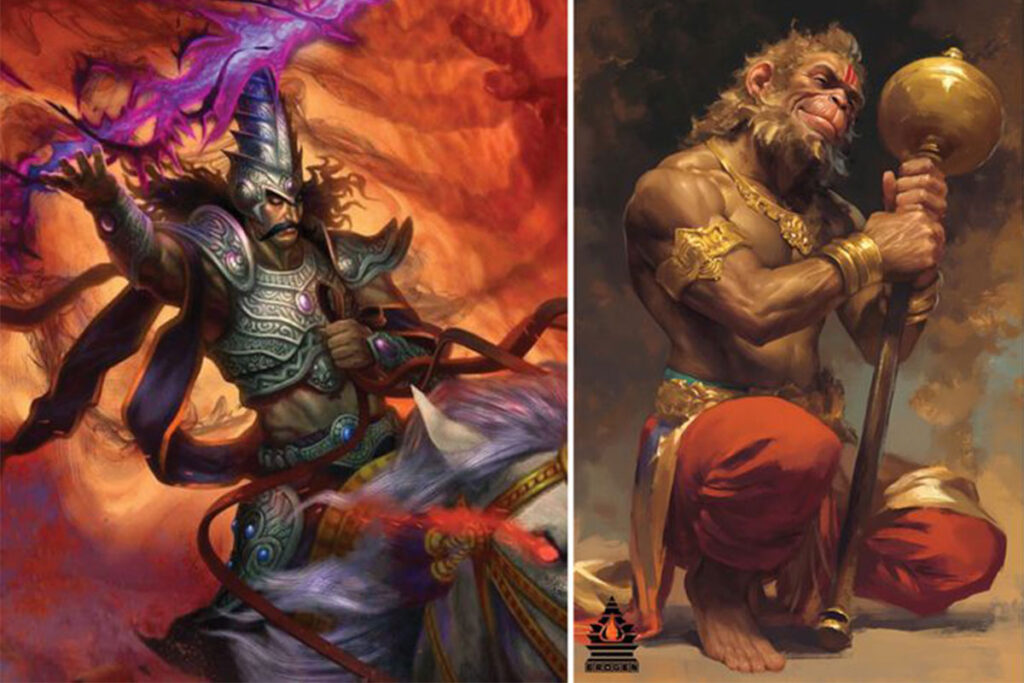
In contrast, Hanuman, despite possessing immense might and power, remained meek and humble. He never boasted of his strength or accomplishments. Instead, he found satisfaction in being recognized as a servant of Lord Rama. When he met Mother Sita in asoka-vatika after a perilous journey across the ocean, he did not introduce himself as the mighty Hanuman who had jumped oceans and faced countless dangers. Instead, with humility (vinamrata), he introduced himself to Sita as mere messenger of Lord Rama. His pride was in his devotion and his connection to Lord Rama. This profound humility converts destructive pride into glorifying humility that earns eternal reverence and
respect.
Tansforming matsarya (jealousy) into large-heartedness (sahridayata)
Matsarya, or jealousy, is that bitter feeling that can arise when another person possesses something desirable — maybe beauty, position, or happiness. Jealousy can lead to unhappiness with one’s own circumstances and resentment towards others, often resulting in anger, malice, and destructive actions. It can cloud judgment and lead to actions that harm oneself and others.
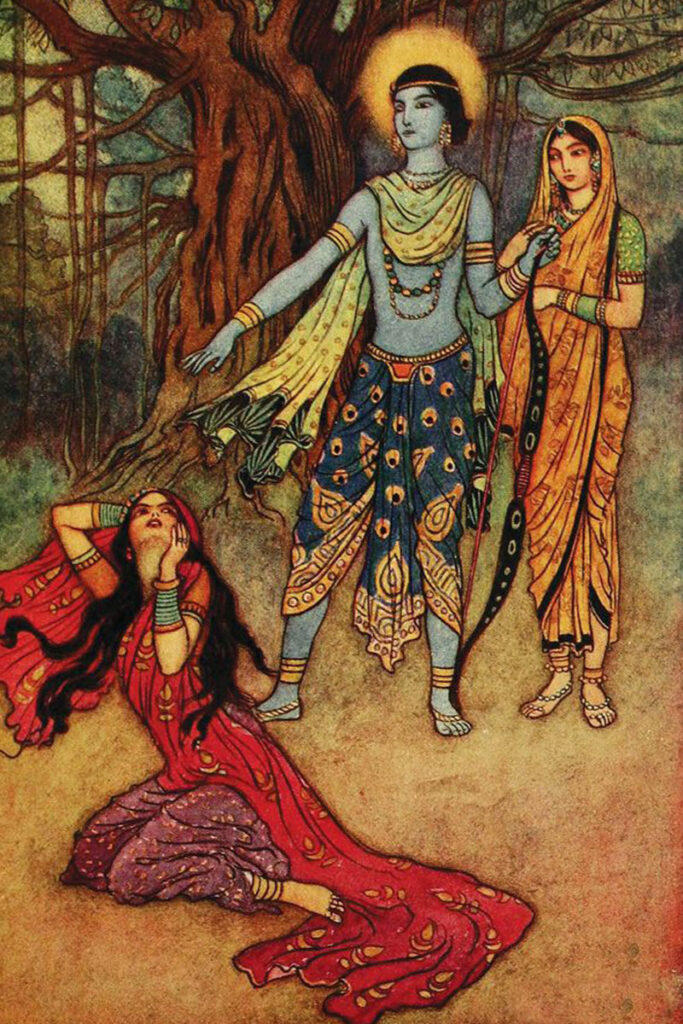
When Surpanakha encountered Lord Rama, she was captivated by his appearance and wished to have him for herself. When Rama gently declined, explaining his devotion to his wife Sita, Surpanakha, influenced by her strong desire, turned her attention to Lakshmana, who also did not accept her advances. Feeling rejected and angered, Surpanakha’s initial attraction transformed into intense matsarya for Sita. She perceived Sita as an obstacle to her desires and she tried to devour mother Sita. This enraged Lakshmana who deformed Surpanakha by chopping off her nose and ears. Unwarranted matsarya led to the undoing of Surpankaha.
In contrast, Mother Sita perfectly embodies sahridayata, or large-heartedness and compassion, particularly in the face of her own discomfort. Consider the incident with Jayanta, the son of Indra. On one occasion, in the guise of a crow, Jayanta playfully pecked at Sita’s foot, causing a small injury. Lord Rama, observing his wife’s discomfort, became upset and sent an arrow towards the crow. Jayanta, frightened, fled, but Rama’s arrow pursued him relentlessly. Unable to find safety, a humbled Jayanta eventually returned and sought refuge with Lord Rama by lying down in front of him. Seeing this, Mother Sita felt immense compassion. She subtly drew Rama’s attention and gently adjusted Jayanta’s position to show a posture of complete surrender. This act of profound empathy and large-heartedness, even towards someone who had caused her suffering, ultimately spared Jayanta.
The key to transformation: dovetailing with Krishna’s
service
The principle in transforming these negative traits is to dovetail them with Krishna’s service. Srila Prabhupada emphasized this concept, explaining that while mixing material and spiritual energy is impossible, one can spiritualize material energy by engaging it in Krishna’s service. This involves consciously directing desires, emotions, and actions towards the satisfaction of the Supreme Lord.
The Bhagavad-gita provides the foundation for this transformation. Lord Krishna states in Gita (9.27), “O son of Kunti, all that you do, all that you eat, all that you offer and give away, as well as all austerities that you may perform, should be done as an offering unto Me.” This verse highlights the importance of offering everything to Krishna, spiritualizing all activities.
Ultimately, the goal is to cultivate genuine detachment from material desires and cultivate attachment to Krishna. By consciously redirecting the energies of kama, krodha, lobha, moha, mada, and matsarya towards Krishna’s service, one neutralizes their detrimental effects and harnesses their power to accelerate their journey back to Godhead.
Devasekhara Vishnu Dasa is a disciple of His Holiness Gopala Krishna Gosvami Maharaja and a native of Ayodhya. A graduate in Bachelor of Technology, he has taught the Bhagavad-gita to over one million registered users through online mediums. He currently serves as the Project Director of ISKCON Ayodhya and is also a member of the ISKCON Communication team and a faculty member at the Mayapur Institute.